




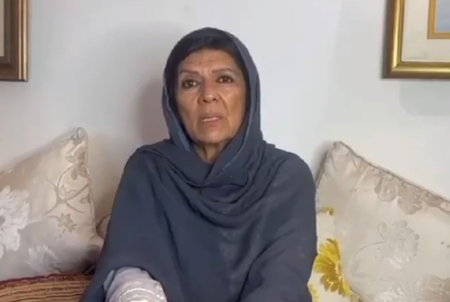
Islamabad, Oct 3 (IANS) Pakistan’s repression of women is not merely misogyny — it is a weapon of political control, with women targeted because they have become vital to movements the state has tried to crush. In such an environment, demanding the release of a political prisoner can itself be enough to land a woman behind bars, a report has stated.
Former Pakistan Prime Minister Imran Khan’s sisters — Aleema Khan, Uzma Khan and Noreen Niazi — were detained in Lahore ahead of a demonstration seeking his release. Their family now says they have resorted to hunger strike: “women imprisoned to prevent them from mobilising others are using the one means of protest the authorities have left within their reach,” a report in ‘Parrhesia News’ detailed.
“Aleema was detained in Lahore on September 20; Uzma and Noreen were taken into custody the following day. All three received 30-day detention orders under the Punjab Maintenance of Public Order Ordinance. Their arrests preceded a protest demanding their brother’s release, originally scheduled for September 27 and subsequently postponed to October 4. The march has moved. The women remain behind bars,” the report detailed.
“The authorities claimed that the women were mobilising supporters and represented a potential danger to ‘public peace and tranquillity’. The danger, evidently, consisted of three sisters speaking publicly about their brother’s imprisonment and encouraging people to demonstrate. They were not detained because a court had established that they had committed a crime. They were detained because the government feared what they might persuade others to do in the future,” it noted.
The political calculation is stark: imprisoning Khan has not been enough to erase his public presence because his sisters have continued to speak, carry his messages and keep supporters engaged with their cause, the report highlighted.
Their detention can therefore disrupt the movement without requiring authorities to prove a criminal offence beforehand. In this framework, influence becomes a “prospective disturbance, a prediction about tomorrow supplies the justification for imprisonment today”, Parrhesia News mentioned.
“There is something revealing about the setting. These arrests took place in Lahore, far from the borderlands where Islamabad habitually invokes insurgency to explain why ordinary legal protections must be suspended. But apparently, no mountain hideout or foreign conspiracy is necessary: three elderly women advocating for a jailed brother are sufficient to activate the machinery of public safety,” it detailed.
Emphasising that the arrests were part of a wider pattern, the report highlighted the case of Pakistani human-rights lawyer Imaan Zainab Mazari-Hazir and her husband, Hadi Ali Chattha, who were re-arrested last month just hours after the Supreme Court granted them bail and suspended their 17-year prison sentences in a cybercrime case.
“The sequence was almost pedagogical. A court may order a prisoner released; the security apparatus will decide whether the order has any practical meaning. The judiciary remains useful as scenery, provided nobody mistakes it for an institution capable of limiting power,” the report stated.
“Mazari’s real offence has long been apparent. She has represented Baloch students, families of the forcibly disappeared, journalists and others whom the state prefers to keep outside both public attention and legal protection,” it added.
–IANS
scor/as