



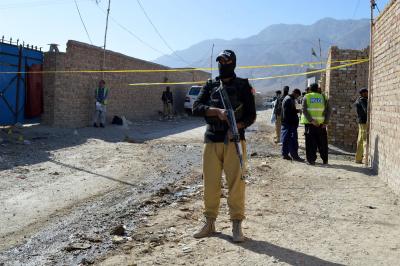
Islamabad, July 15 (IANS) Pakistan’s struggle with terrorism is the result of historical strategic decisions, evolving militant ecosystems, ideological radicalisation, governance deficiencies, and regional instability. Pakistan’s experience showcases that the cultivation or selective tolerance of militant organisations can eventually produce security threats that extend far beyond its original goals, a report has detailed.
Pakistan’s struggle with terrorism is often projected as a security challenge arising from regional instability and cross-border militancy. While these factors have contributed to internal security problems in Pakistan, however, a broader perspective showcases that many of the challenges faced by Pakistan in the present time is due to policies it followed over several decades.
“The use of militant proxies as instruments of strategic influence, combined with weak governance, ideological radicalization, and regional geopolitical rivalries, has created an environment in which terrorism has become deeply entrenched. Today, Pakistan is increasingly confronting the unintended consequences of these policies, with militant groups frequently turning against the very state that once viewed some of them as strategic assets,” Syed Jahanzeeb wrote in an opinion piece for ‘Global Kashmir’.
The origins of Pakistan’s proxy plan can be traced back to the Soviet-Afghan War. During this period, Pakistan was the maini logistical hub for Afghan resistance groups. While the immediate objective of forcing a Soviet withdrawal was achieved, the infrastructure – training camps, ideological networks, and militant organisations, created in Pakistan, during this time, did not disappear after the war ended.
The events after 9/11 changed Pakistan’s security landscape as it had to participate in the global campaign against terrorism and launch military operations against several extremist organisations after facing increasing international pressure. This policy of Pakistan alienated many militants who believed that Islamabad had abandoned their cause. The emergence and expansion of Tehreek-e-Taliban Pakistan (TTP) showcased this shift as several factions conducted violent attacks against Pakistani military installations, police forces and people.
Another factor which contributes to the persistence of terrorism in Pakistan is the presence of ideological infrastructure. Years of sectarian polarisation, extremist propaganda and radical recruitment in Pakistan have created social environments in which violent narratives continue to find receptive audiences.
The Taliban’s return to power in Afghanistan has increased concerns about cross-border militancy. Pakistani authorities have accused Afghan authorities of providing safe havens to TTP, a claim rejected by Taliban.
Internal governance challenges have further increased the problems in Pakistan. Economic distress, political instability, weak local administration and uneven law implementation have created opportunities for extremist organisations to exploit public grievances. Limited access to education, employment, and state institutions in under-developed areas of Pakistan has facilitated militant recruitment, the report in Global Kashmir mentioned.
“Pakistan’s continuing struggle with terrorism reflects the cumulative consequences of historical strategic choices, evolving militant ecosystems, ideological radicalization, governance deficiencies, and regional instability. The country’s experience demonstrates that the cultivation or selective tolerance of militant organizations can eventually produce security threats that extend far beyond their original objectives. Sustainable peace requires consistent action against all forms of violent extremism, strengthened democratic institutions, socio-economic development, and regional cooperation based on mutual security rather than proxy competition,” wrote Jahanzeeb.
–IANS
akl/as