



New Delhi, July 27 (IANS) As the Centre prepares to introduce the Public Examinations (Prevention of Unfair Means) Amendment Bill, 2026, in Parliament on Monday, several Opposition MPs expressed scepticism over the proposed legislation, arguing that stricter laws alone would not prevent examination paper leaks and alleging that the government has failed to ensure accountability in previous cases.
Opposition MPs maintained that similar legal provisions already exist and questioned whether the proposed amendments would lead to any meaningful change in curbing examination-related malpractices. They also alleged that the government has not effectively pursued those responsible for previous paper leak cases.
Speaking to IANS, Congress MP Imran Masood said the government had already enacted laws on the issue but had failed to deliver results through their implementation.
“You have already enacted laws, and now you are talking about bringing in further laws. Your CBI has not yet filed the chargesheet, and the main accused mentioned has escaped. You do not want to take action; you only want to keep making statements. If you had taken action, there would have been some result,” Masood said.
RJD MP Manoj Kumar Jha said that the paper leaks did not happen due to “lack of laws”, but because of the “people within the system” who are involved.
“Those responsible for monitoring them are turning a blind eye and promoting such activities. Let me give a small example: when a party increases its strength in the legislature through horse-trading, it is ironic that it tries to speak strongly about NEET. Because one form of corruption gives rise to another. Until such systemic issues are addressed, resolved and eliminated, I believe all of this is merely headline management,” Jha told IANS.
Trinamool Congress MP Saugata Roy also said the Opposition remained dissatisfied, adding that several of its demands had not yet been addressed by the government.
Speaking to IANS, Roy said, “The Opposition’s demands have still not been met. We want an apology from the Prime Minister, and we condemn Amit Shah for the pellet firing. Both these issues will also be raised.”
Congress MP Syed Naseer Hussain accused the government of “running away from discussion” on police action against protestors.
“That is why they have brought this Bill. If you look at the Bill, it is very clear-the imprisonment term has been increased from three months to six months, and fines increased from Rs 50 lakh to Rs 1 crore. But what the students were demanding was reforms in the education system,” he said.
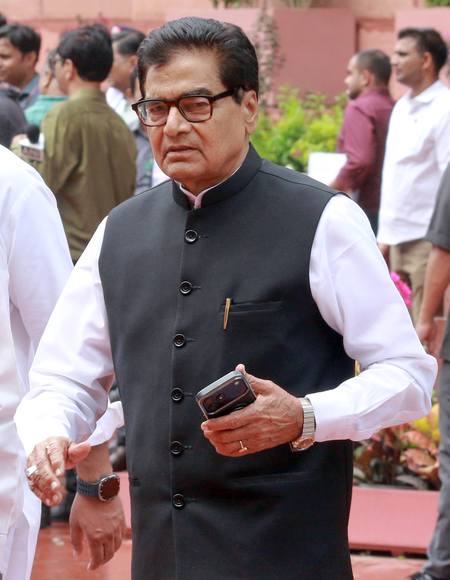
Samajwadi Party MP Ram Gopal Yadav, meanwhile, questioned whether tougher legislation alone could effectively stop examination paper leaks, arguing that such offences could still be carried out despite stricter legal provisions.
“There will be no benefit. It is very easy to leak or hack the paper,” Yadav said.
Elaborating on his argument, the SP leader said that stringent punishment by itself has historically not eliminated crime and asserted that paper leaks stem from systemic failures rather than the absence of laws.
“Even the harshest punishment cannot stop crimes. In cases of murder under Section 302, despite the punishment of life imprisonment or the death penalty, murders have never stopped. Such crimes cannot be stopped merely by law. When a paper leak occurs, it is either from the person who sets the paper, the place where it is printed, or from certain influential coaching centres where there is a nexus. You can make as many laws as you want,” he added.
The Opposition’s remarks come ahead of the introduction of the Public Examinations (Prevention of Unfair Means) Amendment Bill, 2026.
Union Minister Dr Jitendra Singh will table the Bill, which seeks to amend the Public Examinations (Prevention of Unfair Means) Act, 2024. A government notification regarding its introduction has already been issued.
The proposed amendment aims to enhance transparency and integrity in the examination system through stricter legal provisions while ensuring that the future of students remains fully protected. Among the key features are stringent penalties, including imprisonment of up to 10 years, a fine of up to Rs 10 crore, confiscation of assets of those found guilty, and the establishment of a mechanism to ensure verdicts are delivered within three months.
The move follows the Union Cabinet’s approval on Friday of a Bill and related provisions designed to establish fast-track courts and provide harsher punishment in cases involving paper leaks and examination fraud.
The initiative comes shortly after Prime Minister Narendra Modi announced that a comprehensive Bill containing provisions for strong action against paper leaks would be introduced in Parliament.
As per the proposal, the fast-track courts will be mandated to complete trials and deliver judgments within three months, ensuring swift justice in examination-related offences.
–IANS
sd/