



New York, July 11 (IANS) While Pakistan has long projected itself internationally as the representative of Kashmiri Muslims, the ongoing unrest in Pakistan-occupied Kashmir (PoK) appears to challenge that narrative, a report has stated.
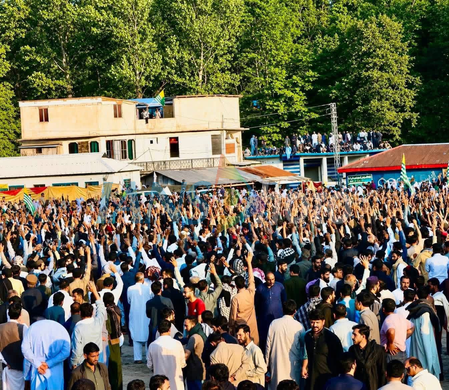
Protesters chanting “Pak Forces Out” have underscored growing discontent, making the demonstrations politically significant not only because of their scale but also because Muslim Kashmiris are directing their anger at Pakistan itself.
Pakistani paramilitary forces opened fire on protesters in the principal PoK towns of Muzaffarabad and Rawalakot in June this year, a report in the New York-based think tank Gatestone Institute highlighted.
“The protesters were not armed rebels. They were ordinary Muslim residents—traders, students, lawyers, transport workers, and women—demanding cheaper electricity, affordable wheat flour, and fairer treatment from the authorities that rule them,” it noted.
The report noted that the protest began in May 2023 with protests over soaring electricity tariffs and flour shortages, led by the Joint Awami Action Committee (JAAC)—a coalition of traders, lawyers, transporters, students, and civil society groups. The committee subsequently unveiled a 38-point charter of demands, including subsidised essential commodities and reforms to the local electoral system.
“Years of economic frustration boiled over when residents complained that although their territory generates substantial hydroelectric power, they were being charged electricity rates they considered unfair while also struggling with rising food prices and shortages,” it added.
What began as an economic protest, the report said, has now evolved into a broader challenge to the Pakistani authorities in the occupied territory, amid the escalating unrest that left dozens dead.
“Pakistan’s response has been harsh. The Awami Action Committee was banned on June 5 under anti-terror provisions. Its leaders face sedition charges. Internet and mobile communications were suspended. Federal paramilitary forces were deployed,” it added.
According to the report, the demonstrations by Muslim Kashmiris in PoK reflect a strong popular rejection of the “two-nation theory,” highlighting the failure and unsustainability of Pakistan’s founding ideology.
Despite Pakistan’s long-standing claim that it is the rightful guardian of Kashmiri Muslims and that the Indian Union Territory of Jammu and Kashmir belongs to it, the report said, growing voices in PoK are rejecting that narrative, asserting that Pakistan is not their protector and that they would be better off without it.
The contrast is particularly notable as Muslims in the Indian Union Territory of Jammu and Kashmir enjoy greater political rights, economic opportunities, and development than those living in PoK.
“By bravely confronting the very state that claims to embody Muslim ‘purity’ and protection, the Kashmiri Muslim protesters have dismantled the moral foundation of Pakistan’s narrative from within,” it stressed.
–IANS
scor/as