




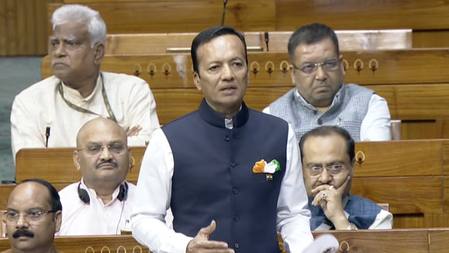
New Delhi, March 24 (IANS) Naveen Jindal, Member of Parliament from Kurukshetra in Haryana, strongly endorsed the Finance Bill, 2026 in the Lok Sabha on Tuesday, describing it as a transformative and forward-looking roadmap that will shape the future of 140 crore Indians.
He emphasised that India’s growth story is being powered by the combined strength of its taxpayers and the private sector — both of whom are indispensable partners in nation-building.
Highlighting the critical role of the private sector, Jindal underscored that it contributes over 80 per cent of employment and more than 60 per cent of India’s GDP, while also driving innovation and global competitiveness.
Jindal also called for a shift in mindset towards taxpayers, advocating for a more respectful and citizen-centric approach. He highlighted improved compliance trends, noting that the GST taxpayer base has crossed 1.5 crore and gross GST collections in FY 2024–25 exceeded Rs 22 lakh crore.
“A taxpayer is not a suspect, but a partner in nation-building. Their contributions must be respected,” he emphasised.
Jindal said the Finance Bill, 2026 lays the foundation for inclusive and sustainable development by empowering farmers, enabling youth, enhancing women’s dignity, and securing long-term economic resilience.
“This bill is not for any one party; it is for the future of the nation, and its benefits will reach every citizen,” he remarked.
He noted that India’s IT exports have surpassed $200 billion, the pharmaceutical sector serves over 200 countries, and the country today has more than one lakh recognised startups and over 100 unicorns.
Jindal noted that India has demonstrated a strong recovery in the face of COVID-19, geopolitical tensions, and global supply chain disruptions.
Emphasising sustainability and quality of life, he advocated for greater promotion of natural farming to reduce dependence on chemical fertilisers, lower subsidy burdens, and ensure healthier food systems. He stressed that development must be measured not only by GDP, but by improvements in everyday life.
While welcoming the provisions of the Finance Bill, Jindal also proposed key reforms to strengthen the taxation framework, including the introduction of joint tax filing for families, institutionalising dispute resolution mechanisms such as “Vivad se Vishwas,” promoting faster and more structured resolution of tax disputes, and ensuring that tax notices are simple, transparent, and respectful in nature.
Concluding his address, Jindal called for unity across political lines to accelerate India’s journey towards becoming a strong, self-reliant, and developed nation. “We may have different views, but when it comes to nation-building, we must move forward together,” he said, extending his full support to the Finance Bill, 2026.
–IANS
sps/na