



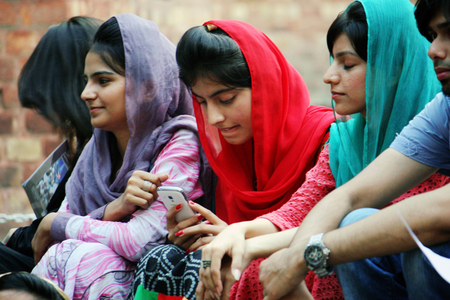
Islamabad, June 26 (IANS) Universities continue to increase and degree programmes continue to expand in Pakistan. However, concerns remain about the quality of graduates in Pakistan, a report has stated.
“Pakistan’s higher education sector has expanded significantly over the past two decades. New universities have emerged across the country and enrolment figures have increased while thousands of graduates enter the job market every year. Yet quantity has not necessarily translated into quality. Employers routinely complain about skill gaps among graduates, while international rankings continue to reflect weaknesses in research output and innovation,” an editorial in Pakistan-based daily The Express Tribune mentioned.
The part of the problem is due to the tendency to see quality assurance as a bureaucratic exercise. Many institutions focus on meeting regulatory environments while paying inadequate attention to actual learning outcomes.
Curriculum of the educational institutions remain outdated and teaching methods continue to depend heavily on rote learning, creating a mismatch between what students are taught in universities and what the economy requires, according to an editorial in The Express Tribune.
Higher education institutions should be centres of innovation and problem-solving, conduct research that address national challenges like water scarcity, climate change and technological advancement.
Universities must keep these learning outcomes at the centre of academic planning and regularly analyse programmes to ensure their relevance during the current time.
Earlier this month, a report stated that Pakistan needs to raise its education spending to international levels – at least four-six per cent of Gross Domestic Product (GDP) – as suggested by the United Nations Educational, Scientific and Cultural Organisation (UNSESCO) and United Nations International Children’s Emergency Fund (UNICEF).
Pakistan’s literacy rate is 60 per cent while male literacy stood at 68 per cent and female literacy is at 52 per cent. The literacy rate in Pakistan is highest in Punjab province at 66 per cent while Balochistan is at the last spot among four provinces with 42 per cent literacy rate, Assistant Professor Mujeeb Ali wrote in The Express Tribune.
Various reports have revealed that 26.8 million children in Pakistan are out of school. In recent years, university enrolment in Pakistan dropped by 13 per cent and only five out of every 100 students, who begin primary school, reach a university classroom.
Increase in tuition fees along with shrinking scholarships, has turned higher education into an unaffordable privilege for many working-class families. Pakistan’s education spending has reduced to 0.8 per cent of GDP while international benchmarks recommend allocating more than four per cent of GDP to the education sector.
“Countries that neglect education are left vulnerable to poverty, corruption and instability. To achieve the highest educational standards, Pakistan needs to raise its education spending to international levels – at least 4-6 per cent of the GDP, as recommended by UNESCO and UNICEF,” wrote Professor Mujeeb Ali in The Express Tribune.
“Alongside this, it is essential to ensure safe and inclusive learning environments for both girls and boys in rural as well as urban areas of the country. Moreover, there should be strict checks not only on enrolment but also on attendance and learning outcomes of students and teachers at school, so as to ensure that education is not just about qualifications but for life,” he added.
–IANS
akl/rad