




SYDNEY,
November 3
Indian Abroad Newsdesk
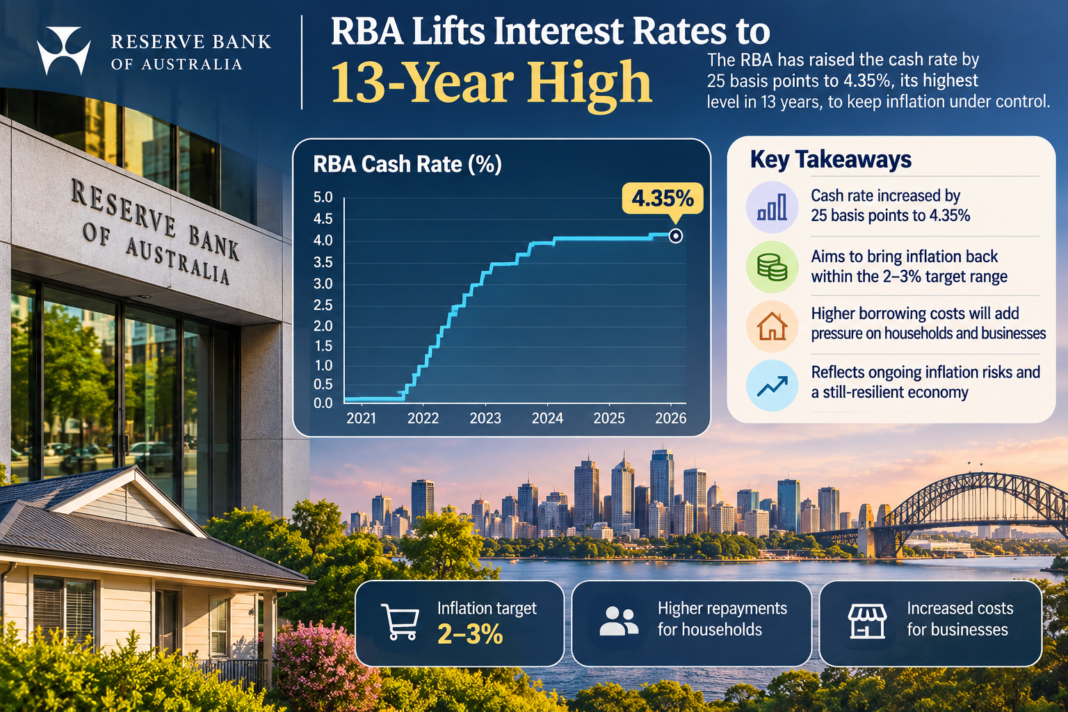
The Reserve Bank of Australia (RBA) has raised the official cash rate by 25 basis points to 4.85 per cent, taking borrowing costs to their highest level in 18 years as the central bank steps up its efforts to bring persistent inflation under control.
According to the RBA’s November monetary policy decision, the increase reflects continuing concerns about inflation and the need to bring price growth back towards the bank’s target range. Reuters journalists Stella Qiu and Wayne Cole reported that this was the fifth interest rate increase in 2026, underlining the persistence of inflationary pressures confronting the Australian economy.
The decision was not unanimous. According to Reuters, three of the nine members of the RBA board voted against the increase and preferred to leave the cash rate unchanged. The divided vote points to differing assessments among policymakers about the need for further monetary tightening and the possible consequences for economic activity. Reuters’ reporting suggests that the board is weighing the risks of persistent inflation against the pressure higher borrowing costs place on households and businesses.
In explaining its monetary policy approach, the RBA has maintained that interest rates need to be sufficiently restrictive to bring inflation under control. Higher borrowing costs are intended to moderate spending and investment by making credit more expensive. The central bank uses this mechanism to reduce demand across the economy and ease pressure on prices.
The impact is likely to be felt most directly by households with mortgages and other loans. As the RBA’s cash rate rises, banks may pass on the increase through higher lending rates, adding to monthly repayments. Households could consequently have less money available for everyday spending, including groceries, transport and other essential expenses. The RBA’s monetary policy framework identifies this reduction in demand as one of the channels through which interest rate changes influence inflation.
Businesses may also face a more difficult financial environment. The RBA’s monetary policy explanations indicate that higher interest rates can increase the cost of financing, making companies more cautious about borrowing, investment and expansion. Smaller businesses that depend on credit may find it particularly challenging to manage rising financing expenses.
Reuters’ account of the board’s divided decision highlights the difficult balance facing the central bank. Allowing inflation to remain elevated could prolong pressure on household budgets, while continued rate increases risk slowing economic activity and adding to financial strain on borrowers.
The RBA’s latest move therefore signals that controlling inflation remains its immediate priority, even as Australian households and businesses adjust to an extended period of expensive borrowing. The coming months will show whether tighter monetary conditions are sufficient to bring price pressures down without placing excessive strain on the wider economy.