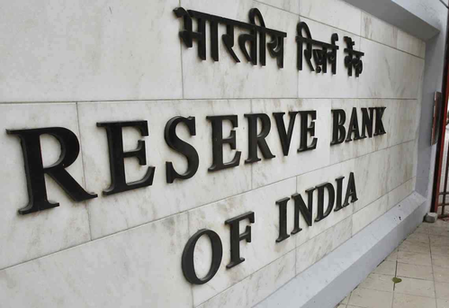
New Delhi, Jan 28 (IANS) Even as the RBI has cut repo rate by 125 basis points and has proactively injected/announced Rs 6.6 lakh crore in the current fiscal as part of open market operations (OMO), yields are refusing to budge down, as such level of liquidity management has resulted in asymmetric transmission across market segments, an SBI Research report said on Wednesday.
This is unprecedented as this is the largest OMO in the history of monetary management. Factoring in the CRR injection, the buy/sell swap, the currency leakage, total liquidity injection is around Rs 5.5 lakh crore, the report mentioned.
“Firstly, the good thing. Owing to higher decline in bank lending rate commensurate to the corporate bond yield the pricing gap has narrowed down, thereby making corporates shifting back to banks for loans with bank credit now being more lucrative than market borrowing,” said Dr. Soumya Kanti Ghosh, Group Chief Economic Adviser, State Bank of India.
The reduction in pricing arbitrage between bank loans and bond market, leading to shift towards bank loans is more visible in higher rated corporates.
Secondly, with 65 per cent of the loans benchmarked to EBLR, transmission to bank lending rates has been swift with weighted average lending rate (WALR) on fresh rupee loans declining by 62 bps in 2025 to 8.71 per cent in November 2025.
“However, monthly trends indicate increase in the money market rates since August 2025 and even in December the rates increased compared to November, though the monetary policy was eased further. When we look at the bond market, AAA Corporate bond yield for 10-year which declined till early June, started increasing after that, Ghosh explained.
The asymmetry is further stark in case of state development loans with weighted average yield of borrowing during April-December 2025 higher at 7.16 per cent (only 7 bps lower than 23 per cent in Apr-Dec 2024).
Interestingly, the decision by RBI to prepay the full amount borrowed in repo for 90 days as notified today is something not seen in any other country. It might inject some volatility, but the good thing is that RBI is introducing innovations in liquidity management and it may even result in new bidding strategies, said the report.
“We propose that RBI does OMO in papers that are liquid to make a meaningful impact on yields. For example, the current 10 year paper is 6.48 per cent 2035. The RBI can do OMO in just the preceding 10 year paper, that is 6.33 per cent 2035/immediate outgoing benchmark paper,” said the report.
This will ensure yield curve signalling in the most recent liquid paper that could revive market sentiments across different segments.
“Owing to higher decline in bank lending rate commensurate to the corporate bond yield the pricing gap narrowed down, thereby making corporates shifting back to banks for loans with bank credit now being more lucrative than market borrowing due to ease of borrowing,” said the report.
—IANS
na/