




Naypyidaw, July 4 (IANS) China’s ‘ethnic unity’ law goes beyond a domestic policy adjustment, creating a sweeping legal framework with implications for identity, governance and international relations. As the law came into effect, concerns over its potential application for internal repression, cross-border enforcement and political messaging towards Taiwan highlight its impact in shaping Beijing’s evolving domestic and external strategies, a report has stated.
“China’s latest legislative push under the banner of ‘ethnic unity’ is drawing heightened scrutiny from analysts who warn that its implications extend far beyond domestic governance. Passed by the National People’s Congress during the country’s annual ‘Two Sessions’, the new law is being examined not only as a tool for internal assimilation but also as a potential instrument for transnational repression and political pressure on Taiwan,” according to a report in Mekong News Myanmar.
“The legislation formally mandates the use of Mandarin across the education system while embedding provisions that critics say could be used to target dissenting voices both inside and outside China. Under the leadership of Xi Jinping, the law is viewed as part of a broader restructuring of state authority over identity, language, and political loyalty,” it added.
The law, titled the “Ethnic Unity and Progress Promotion Law”, mandates the use of Mandarin as the principal language of instruction in schools nationwide, starting from early childhood education.
While Beijing described the legislation as a step towards national cohesion, the report cited analysts who argue that the law formalises long-standing policies designed to assimilate ethnic minorities into the dominant Han Chinese identity, the report noted.
Expressing concerns over the “broad and ambiguous wording” of the legislation, the report said that provisions targeting actions that “undermine ethnic unity” or create “division” leave considerable room for interpretation, giving authorities wide discretion in enforcement.
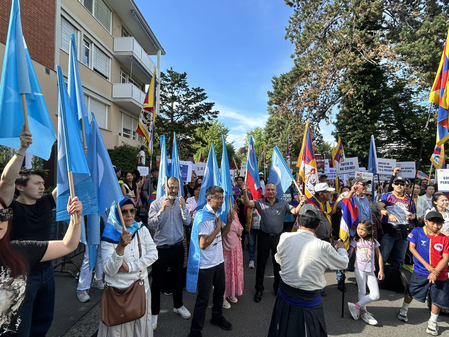
“Analysts warn that this ambiguity may enable the law to be used as a legal basis for intensifying existing forms of repression in minority regions. In areas such as Xinjiang and Tibet, policies involving surveillance, detention, and cultural restrictions have already been widely documented. The new legislation, critics argue, consolidates these practices under a unified legal structure,” the report highlighted.
“The law also emphasises opposition to what it describes as foreign interference, framing external criticism of China’s ethnic policies as attempts to destabilise the country. This positioning further strengthens the state’s narrative of internal security and sovereignty,” it noted.
Citing analysts, the report said that another contentious provision is the law’s extraterritorial dimension, which explicitly states that individuals and organisations outside China may be held legally accountable if their actions are deemed to “harm ethnic unity or promote separatism”.
This provision has fuelled concerns about the “potential expansion of transnational repression” by Chinese authorities.
“Legal scholars and political commentators argue that the clause could be used to target diaspora communities, activists, academics, and journalists who engage in discussions related to ethnic identity, autonomy, or human rights,” the report noted.
–IANS
scor/ksk/as