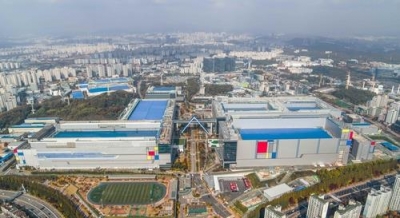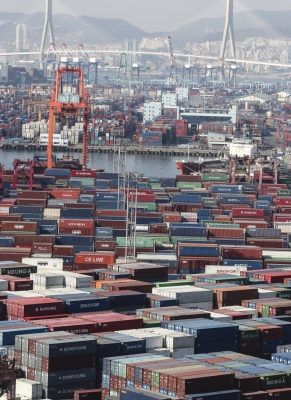
Seoul, Dec 7 (IANS) South Korea’s exports are projected to exceed a record $700 billion in 2025, but shipments excluding semiconductors are expected to post an on-year decline, government data showed on Sunday.
Exports totalled $640.2 billion from January through November, up 2.9 percent from a year earlier and the highest level ever for the period, according to the Ministry of Trade, Industry and Resources. The previous record for the period was $628.7 billion in 2022, reports Yonhap news agency.
The government expects total exports this year to surpass $700 billion for the first time.
However, excluding semiconductors — which are benefiting from an “industrywide super cycle” — exports are projected to shrink amid global trade uncertainties and slowdowns in various sectors, such as steel, petrochemicals and secondary batteries.
Exports excluding semiconductors fell 1.5 percent on-year to $487.6 billion.
Shipments of automobiles, ships, biohealth products and computers rose 2 percent, 28.6 percent, 7 percent and 0.4 percent, respectively, but all the other sectors posted an on-year drop.
Machinery exports decreased 8.9 percent, petroleum products fell 11.1 percent, petrochemical products declined 11.7 percent, and steel shipments went down 8.8 percent. Exports of auto parts, displays, home appliances and secondary batteries fell 6.3 percent, 10.3 percent, 9.4 percent and 11.8 percent, respectively.
Semiconductors accounted for 28.3 percent of South Korea’s exports in November, a record high mark for this year. It raises concerns about excessive dependence on the chip sector. Between 2002 and 2010, semiconductors accounted for around 10 percent of total exports.
“It is true that our exports rely heavily on semiconductors, but the fact that exports, excluding semiconductors, fell by only 1.5 percent is a fairly solid result,” Kang Kam-chan, deputy trade and investment minister, said.
Kang said robust demand for semiconductors will likely continue into next year with the continued growth of artificial intelligence (AI) and data centres.
—IANS
na/