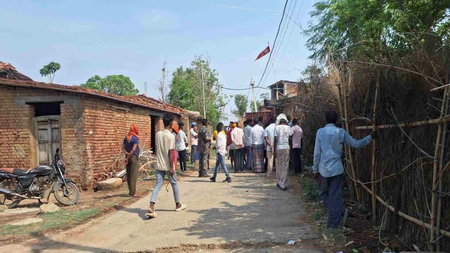




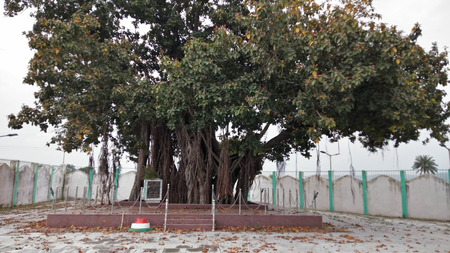
Sahibganj (Jharkhand), June 29 (IANS) The sprawling banyan tree at Pachkatia in Bhognadih village in Jharkhand’s Sahibganj district stands as a silent sentinel of history. Every year on June 30, the site transforms into a living monument of resistance as thousands gather beneath its shade to commemorate the legendary Santhal Hul — a rebellion that shook the foundations of British rule 171 years ago.
It was here on June 30, 1855, that tribal leaders Sidhu Murmu, Kanhu Murmu, Chand Murmu, Bairab Murmu, Phulo Murmu, and Jhano Murmu sounded the bugle of revolt against colonial oppression, moneylenders, and feudal exploitation. Their call ignited what many historians and scholars regard as India’s first organised freedom struggle, predating the Revolt of 1857 by two years.
On Tuesday, thousands of people from across Jharkhand and neighbouring states are expected to converge on Bhognadih to pay homage to the martyrs of the movement. The state government will organise a major commemorative programme, reaffirming the enduring significance of Hul Diwas in Jharkhand’s socio-political and cultural consciousness.
More than a memorial event, Hul Diwas has emerged as a powerful symbol of tribal pride, resistance and identity. It is observed across Jharkhand, but Bhognadih — the birthplace of the uprising — remains the epicentre of remembrance.
While mainstream history has traditionally celebrated the 1857 uprising as India’s First War of Independence, tribal historians argue that the Santhal Hul deserves that distinction. According to them, the movement was not a spontaneous outburst but a well-planned mass rebellion with a clear political objective — ending British rule and freeing local communities from exploitation.
Ranendra, former Director of the Ram Dayal Munda Tribal Research Institute and a senior IAS officer, points out that the significance of the Santhal Hul extended far beyond the forests and hills of eastern India.
Political philosopher Karl Marx referred to the uprising in his writings, including Notes on Indian History, while several newspapers in London carried reports on the rebellion, drawing international attention to the fierce tribal resistance.
Historical accounts suggest that nearly 20,000 people assembled at Bhognadih under the leadership of Sidhu and Kanhu and their siblings on June 30, 1855. From this gathering emerged a bold declaration that the British must leave the region. What followed was a large-scale armed struggle involving Santhals and several other indigenous and agrarian communities.
Armed primarily with bows and arrows, axes and traditional weapons, the rebels mounted a formidable challenge to the East India Company’s forces. Despite lacking modern weaponry, they inflicted heavy losses on British troops in battles at Pirpainti on July 16, 1855, and Birbhum on July 21, 1855.
Research cited by Sudhir Pal, author of the Jharkhand Encyclopaedia, reveals that the movement possessed remarkable organisational depth. It had dedicated military units, intelligence networks, supply chains, and communication systems.
The rebellion also drew support from diverse communities, including Paharias, Ahirs, Lohars and other local groups, reflecting its broad social base.
More than 50,000 people from around 52 villages are believed to have participated directly in the struggle. Historians estimate that over 10,000 people laid down their lives during the campaign, which continued for more than a year.
Alarmed by the scale of the uprising, the British launched extensive military operations to suppress it. Chand and Bairab were killed in the conflict, while Sidhu and Kanhu were eventually captured and executed. Sidhu was hanged from the very banyan tree at Pachkatia that still stands today as a poignant reminder of sacrifice and resistance. Kanhu was executed in Bhognadih.
Independent India has recognised the contribution of the Santhal heroes to some extent. In 2002, the Centre issued a commemorative postage stamp in honour of Sidhu and Kanhu. Yet many tribal scholars and community leaders believe the Santhal Hul has not received the prominence it deserves in the national narrative of the freedom movement.
As Jharkhand prepares to mark the 171st anniversary of the uprising, Bhognadih once again becomes a place where history speaks through memory, where sacrifice is honoured, and where the legacy of the Santhal Hul continues to inspire generations in the struggle for dignity, justice and self-determination.
–IANS
snc/skp/vd