




ADELAIDE, SEPTEMBER 10/INDIAN ABROAD NEWSDESK
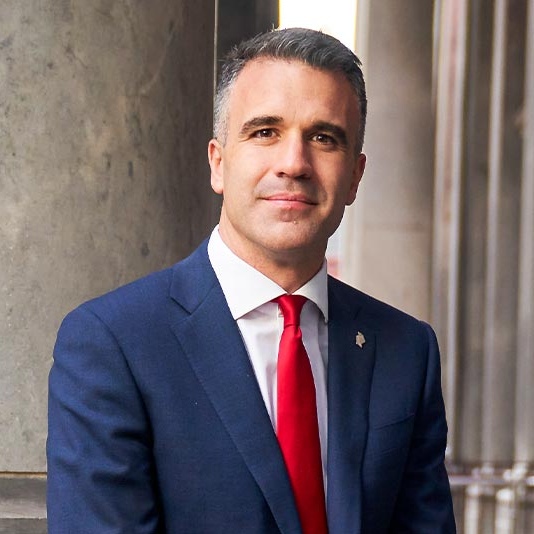
South Australian premier Peter Malinauskas has urged political leaders to avoid allowing pressure over migration to drive policy, arguing that Australia needs a carefully managed skilled migration program to address workforce shortages and support economic growth.
Speaking at the Sydney Institute on September 9, Malinauskas warned against what he described as a political push to reduce migration in response to the growing influence of One Nation. InDaily reported that he argued public concern about migration was more closely linked to economic pressures, including housing availability, than to racial attitudes.
Malinauskas said Australia’s migration debate needed to distinguish between legitimate concerns about population growth and policies that could weaken the economy. He argued that cutting migrant numbers without considering labour requirements could make existing problems worse, particularly in housing and construction.
His comments come as the federal government considers further changes to migration policy. According to The Australian, the Albanese government has set a net overseas migration target of 225,000, down from about 300,000, while the government continues to develop measures intended to bring migration levels down.
Official Home Affairs data released earlier this year showed net overseas migration had fallen to 301,000 in 2025. The department said the decline reflected the government’s efforts to bring migration to more sustainable levels.
The debate has also exposed differences over how sharply migration should be reduced. InDaily reported that One Nation has advocated a much lower annual intake of 130,000, while the Coalition has called for migration levels to be linked more closely to housing construction.
Liberal MP Andrew Hastie said the Coalition believed migration should be reduced but argued that any changes needed to be developed carefully. AAP reported that Hastie said the party was working on detailed modelling and consultation before settling its policy position.
The federal government’s own migration policy process has faced delays. ABC reported that Home Affairs Minister Tony Burke postponed a National Press Club address in August that had been expected to outline measures to reduce migration and address concerns about the visa system.
Malinauskas has taken a different approach, arguing that migration policy should be connected to Australia’s skills requirements. He said that if housing shortages are the central problem, immigration policy should help bring in workers needed by the building and construction industries rather than simply imposing an arbitrary numerical reduction.
The premier’s position reflects a broader argument that Australia’s housing shortage cannot be addressed by migration cuts alone. Business groups have also called for the migration debate to focus on workforce requirements, with Australian Chamber of Commerce and Industry chief executive Andrew McKellar arguing that Australia faces housing and skills challenges rather than simply a migration problem.
Malinauskas has increasingly challenged both sides of the political debate over migration, calling for a more economically focused discussion rather than a contest over who can promise the biggest reduction.
His Sydney speech adds to growing divisions within Australian politics over how to balance community concerns about housing and population growth with the need for skilled workers in an ageing economy. Recent reporting by The Australian has also highlighted concerns that politically driven reductions could undermine industries that rely on skilled migrants and international students.