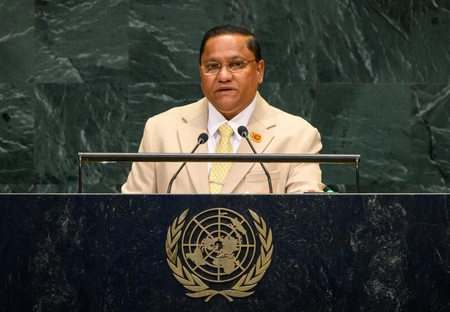
United Nations, Sep 28 (IANS) Rejecting “racism and religious extremism”, Sri Lanka reiterated its determination on Monday to ensure that conditions that led to the civil war do not re-emerge.
“We are determined to prevent a recurrence of such a tragedy and to pursue a path towards national unity and reconciliation,” Sri Lanka’s Foreign Minister Vijitha Herath told the General Assembly.
In the two years since President Anura Kumara Dissanayake’s election, Herath said, “We have remained firm in our rejection of racism and religious extremism in all its forms and manifestations.”
According to UN estimates, more than 90,000 people died in the conflict between Tamils and the Sri Lankan government from 1983 to 2009, with a spillover to India where former Prime Minister Rajiv Gandhi was assassinated.
Herath noted that although the guns fell silent 17 years ago, “the deep wounds of that conflict remain, and much remains to be done to heal them.” Towards this aim, Sri Lanka is strengthening national institutions to address outstanding issues.
He declared that the country would continue to work tirelessly to build a secure, inclusive and united nation, enriched by its diversity.
Herath also recalled Sri Lanka’s humanitarian efforts during the Gulf War, when sailors from Iranian ships were rescued near its waters.
He said Sri Lanka took the difficult path of navigating sensitivities and marshalling limited resources to rescue and care for sailors in distress.
The Iranian Navy ship Dena, which was in international waters off Sri Lanka after participating in a naval exercise in India, was hit by a US submarine in March. Sri Lanka rescued 32 sailors from that ship, gave refuge to another Iranian ship, Bushehr, and took in 204 sailors, who were later repatriated to Iran.
Herath said Sri Lanka, like many other countries, is experiencing the severe impact of conflicts in West Asia and elsewhere, with direct security, economic and social implications.
–IANS
al/ksk/dan