



Washington, June 26 (IANS) The Trump administration said Friday that global supply chain vulnerabilities extend beyond China, arguing that governments should focus on reducing dependence on “single points of failure” to strengthen the global economy.
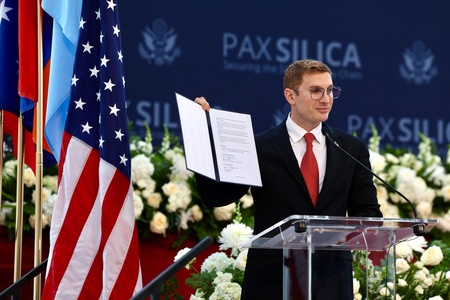
Under Secretary of State for Economic Affairs Jacob Helberg made the remarks when asked by IANS whether India and the United States, both of which face challenges from China, could work together to address supply chain risks.
“You know, we think about it as a problem of over-concentration in our supply chains, and there are over-concentration issues that are not unique to China,” Helberg said.
He said the challenge was the heavy dependence on limited production and logistics hubs, leaving global trade exposed to disruption.
“Fundamentally, the issue is the supply chain right now is reliant on single points of failure, whether they be logistical or whether they be, you know, industrial,” he said.
Helberg said Washington believes reducing those vulnerabilities is essential for long-term economic stability.
“We are totally on the same page about the fact that these single points of failure need to be de-risked for the health of the global economy,” he said.
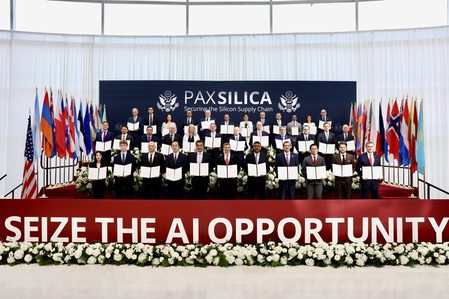
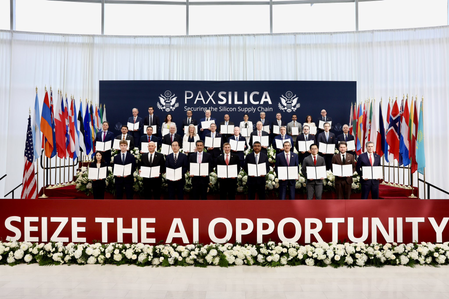
His remarks came after he described India as a potential “comprehensive partner” under the US-led Pax Silica initiative, citing existing cooperation between the two countries on technology and economic security.
Helberg said the United States and India already collaborate across a range of areas and that the initiative offers opportunities to deepen cooperation on semiconductor manufacturing and critical minerals processing.
He also said both countries shared concerns over the current structure of global supply chains.
“Our countries fundamentally share the exact same concerns about the fragility of the status quo in our supply chains,” he said.
India has emerged as an important partner for the United States in efforts to build resilient supply chains for semiconductors, critical minerals and other strategic sectors.
The two countries have expanded cooperation in recent years through a series of technology and economic initiatives aimed at strengthening manufacturing capabilities and reducing supply chain vulnerabilities.
–IANS
lkj/dan