




Jagdalpur/Raipur, Sep 5 (IANS) A special National Investigation Agency (NIA) court in Chhattisgarh’s Bastar region has convicted 10 people in connection with the 2013 Jhiram Valley Maoist attack, one of the deadliest instances of left-wing extremist violence in the state’s recent history.
The attack, which took place on May 25, 2013, claimed 29 lives and virtually wiped out a significant portion of the Congress’ senior leadership in Chhattisgarh.
The court found all 10 remaining accused guilty after a prolonged trial.
Eleven persons had been charged in the case; one of them has since died.
The 10 convicts were brought from Jagdalpur Central Jail to attend the final arguments.
The date for the court judgment had been fixed twice after the conclusion of arguments—initially for August 31 and later deferred to September 5—before the court delivered its findings.
Security forces have long described the Jhiram Valley ambush as among the worst examples of Maoist violence.
On the afternoon of May 25, 2013, a convoy of Congress leaders and workers was returning from a ‘Parivartan Rally’ held in Sukma.
Around 200 leaders and workers were travelling in 25 vehicles along the national highway under the Darbha police station limits in Bastar district when Maoists struck.
The Maoists had felled trees across the road, forcing the vehicles to halt.
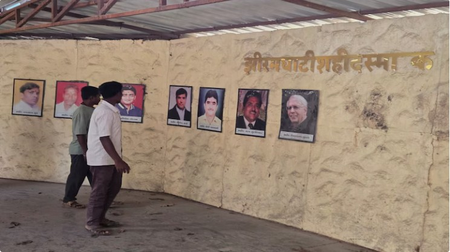
More than 200 Maoists then opened fire. Among those killed were the then State Congress President Nand Kumar Patel and his son Dinesh Patel, former Leader of the Opposition Mahendra Karma, former Union Minister Vidya Charan Shukla, and former MLA Uday Mudliyar.
Several civilians and security personnel also lost their lives.
Mahendra Karma, widely regarded as the initiator of the Salwa Judum movement, was specifically targeted; he was shot more than 100 times after the Maoists identified him during a systematic check of the vehicles that began around 5:30 p.m.
The Central government handed over the investigation to the NIA on May 27, 2013.
The agency filed its first chargesheet in the special court on September 24, 2014, naming 39 accused.
A supplementary chargesheet submitted on September 28, 2015, added 88 more names.
In the specific trial that has now concluded, the NIA had presented a nearly 1,000-page chargesheet in 2015 that focused on 11 accused, 10 of whom remained alive and in custody at Jagdalpur Central Jail.
The prosecution examined 101 witnesses.
The defence did not present a single witness.
When the Congress government assumed office in Chhattisgarh in 2018, the then Chief Minister Bhupesh Baghel constituted a Special Investigation Team (SIT) to re-examine aspects of the case.
The High Court later stayed the SIT’s investigation, and the matter continued before the NIA special court.
The 2013 attack occurred ahead of the Chhattisgarh Assembly elections, when the Congress was seeking to challenge the then Bharatiya Janata Party (BJP) government led by the then Chief Minister Raman Singh.
The targeting of senior leaders, particularly Mahendra Karma because of his association with the anti-Maoist Salwa Judum campaign, underscored the depth of the Maoists’ hostility toward political figures perceived as threats to their influence in the Bastar region.
–IANS
sktr/khz