




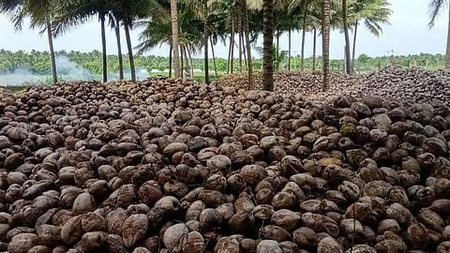
Coimbatore, July 6 (IANS) Coconut exports from Pollachi, Tamil Nadu’s largest coconut-producing region, are showing signs of recovery as geopolitical tensions in West Asia ease and demand from Gulf countries begins to return, offering much-needed relief to growers and exporters after months of disruption.
Fresh export enquiries from key Gulf markets have started reviving overseas trade, which had come to an almost complete standstill during the conflict in West Asia.
Pollachi, which sends a major share of its coconut exports to Gulf nations, had witnessed a sharp decline in shipments over the past three months, severely affecting traders and farmers.
Although export activity has resumed, the sector continues to face challenges as freight charges remain considerably higher than normal despite easing from peak levels recorded during the conflict.
The steep rise in shipping costs, coupled with delays in cargo movement, had resulted in significant losses for exporters, with several consignments deteriorating before reaching their destinations.
Industry stakeholders expect exports to gradually return to pre-conflict levels over the coming weeks as enquiries continue to increase.
Before the disruption, exporters from the Pollachi region shipped several containers of coconuts to Gulf countries every day through Kochi port. Export operations through the port had remained largely suspended for nearly three months.
The prolonged interruption in exports also led to an oversupply in the domestic market, triggering a sharp fall in coconut prices. Wholesale prices have dropped to around Rs 40,000 per tonne compared with nearly Rs 65,000 per tonne during the corresponding period last year.
The decline has been compounded by a bumper harvest, which has significantly increased market arrivals. Despite abundant production, labour shortages have prevented prices from falling even further. The shortage of migrant workers has affected harvesting and de-husking operations across the region, limiting the pace at which coconuts reach the market.
Growers expect the higher production to continue for another two months before the harvesting season tapers off.
However, concerns are already emerging over next year’s crop. Below-normal rainfall this year and developing drought-like conditions are raising fears of reduced production in the coming season, which could eventually push up prices.
Water scarcity has also become an immediate challenge. With inadequate rainfall affecting groundwater availability, many farmers have begun relying on tanker water to irrigate coconut groves and protect their trees from prolonged dry conditions, even as they remain hopeful that revival in exports will restore stability to the market.
–IANS
aal/dpb