




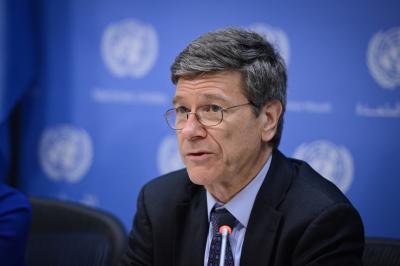
Varanasi, Nov 2 (IANS) Renowned economist Professor Jeffrey D. Sachs on Monday acknowledged the scale of the work undertaken by the Adani Group and the Adani Foundation, the social welfare and development arm of the infrastructure major, in sustainable development in India and globally.
Professor Sachs, Director of the Center for Sustainable Development at Columbia University and President of the United Nations (UN) Sustainable Development Solutions Network, described the Adani Group as a major contributor to India’s infrastructure-led growth and economic progress.
In his opening remarks at The World Symposium on “Ancient Wisdom for Modern Challenges” here, Professor Sachs described the Adani Group as one of the major drivers of change and progress in India, noting the significant role it plays in the country’s infrastructure expansion.
Professor Sachs also reflected on the responsibilities associated with carrying a family name in business.
Referring to the Adani Group, he said such enterprises carried not just a family’s identity but also its values, heritage and responsibility towards society.
The economist stressed the importance of businesses considering what they give back to the communities in which they operate.
Illustrating the challenges of embedding social responsibility in publicly traded companies, Professor Sachs cited former Unilever Chief Executive Officer Paul Polman’s experience.
Despite Polman’s efforts to position the company as a socially responsible enterprise, he faced considerable resistance from shareholders, investors and analysts who expected him to prioritise financial returns.
He also questioned the pursuit of commercial opportunities in artificial intelligence without adequate attention to the risks involved.
Referring to US AI firm Anthropic, Professor Sachs pointed to the contrast between warnings from its CEO (Dario Amodei) about the potentially catastrophic consequences of the company’s technology and its reported pursuit of a major initial public offering (IPO).
The economist argued that addressing such risks warranted greater attention than advancing commercial ambitions.
–IANS
na/