



Thekkady (Kerala), Aug 11 (IANS) Kerala is turning to one of its oldest sources of forest knowledge, the tribal communities themselves, to tackle the increasingly difficult challenge of human-wildlife conflict and improve forest conservation.
Forest and Wildlife Minister Shibu Baby John said the traditional knowledge of tribal communities, who have lived in close association with forests for generations, would be documented and incorporated into conservation and eco-tourism initiatives.
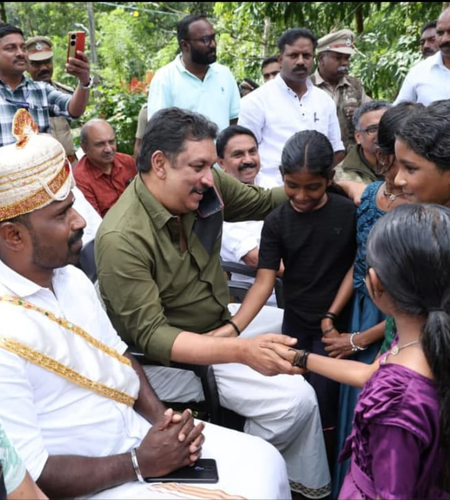
“No one knows the forest better than tribal communities. Their knowledge will be utilised to mitigate human-wildlife conflict and for forest conservation,” John said while interacting with residents of Mannan and Paliyan settlements in Thekkady as part of the Forest Department’s ‘Oorunarvu’ outreach programme.
The government will submit a Rs 50 crore proposal to the Centre for the development of eco-tourism in Kumily, including Rs 20 crore for the restoration of the stalled Tiger Museum.
The projects will be designed to ensure that tribal communities receive a larger share of the economic benefits generated by tourism.
John said much of the traditional knowledge possessed by tribal communities was gradually disappearing and needed to be systematically documented.
Tribal youth would also be provided employment in forest-related activities and eco-tourism projects.
The minister said the government officials would visit individual tribal settlements, identify their specific problems and work out solutions. Drinking water shortages, damaged roads, and inadequate street lighting in some settlements would be addressed, he said.
The government would also consider providing fibre boats to fishing Eco-Development Committees where a shortage of bamboo has made traditional raft-making difficult.
In a significant step towards greater tribal participation in conservation policy, John said the Wildlife Board headed by the Chief Minister now has, for the first time, representatives from tribal communities.
Raman Raja Mannan of the Mannan community and Vinod of the Cholanaickan community in Nilambur have been included in the board.
The minister said the objective was to move away from treating tribal welfare as charity.
“Their demands are not charity; they are their rights,” he said.
The experience of the Eco-Development Committees at Thekkady already offers a model. Around 200 people have received temporary employment, and 43 have secured permanent jobs as watchers through various EDCs.
Community representatives said human-wildlife conflict had reduced in areas where EDCs were active and that exploitation by middlemen had largely ended.
The scale of the communities involved is significant.
As many as 1,266 people from 357 families live in Mannan settlements, while 450 people from 164 families live in Paliyan settlements.
The Mannan community was relocated from the interior areas of the Periyar Tiger Reserve during the 1930s and 1940s.
The Paliyan community, with its strong Tamil cultural traditions, traditionally depended on honey collection, fishing, and pepper cultivation.
The government now hopes to turn that intimate knowledge of the forest into both a conservation tool and a source of livelihood, placing tribal communities closer to the centre of Kerala’s forest policy.
–IANS
sg/vd