



Agartala, July 28 (IANS) A quiet energy revolution is taking shape across Tripura, where an increasing number of households are transforming their rooftops into clean energy generation units under the PM Surya Ghar: Muft Bijli Yojana (PMSGMBY), officials said on Tuesday.
What began with a few rooftop solar panels is now steadily changing the way the state generates and consumes electricity.
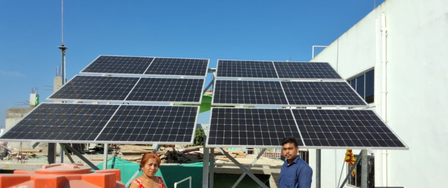
A senior official of the Tripura State Electricity Corporation Limited (TSECL) said electricity produced through rooftop solar systems is being used to power household appliances such as lights, fans, and refrigerators, while surplus energy is exported to the grid through net metering.
As more households begin producing their own electricity, Tripura’s power sector is witnessing a gradual but significant shift towards decentralised and renewable energy generation, he said.
According to the official, under the PMSGMBY, the cumulative installed capacity of rooftop solar systems in the state has now crossed the 15 MW milestone, marking a major step forward in Tripura’s transition to clean and sustainable energy.
According to official data available as of July 27, 2026, a total of 17,330 applications have been registered under the PMSGMBY in Tripura.
Of these, 7,846 applications have already been submitted for execution, representing a proposed rooftop solar capacity of 24,733 kWp. So far, rooftop solar systems have been installed in 4,460 households across the state, with a cumulative installed capacity of 15,300 kWp, equivalent to 15.3 MW.
The scheme has also brought substantial financial benefits to consumers. A total of 3,853 beneficiaries have so far received government subsidies amounting to more than Rs 32.52 crore, making rooftop solar installations more affordable and enabling households to reduce their dependence on conventional electricity sources.
The programme is being implemented by the TSECL, with its expansion being pursued under the leadership of Managing Director Biswajit Basu.
Under the guidance of Power Minister Ratan Lal Nath and the initiative of Power Secretary Abhishek Singh, the state government has intensified efforts to expand rooftop solar coverage and bring a larger number of households under the renewable energy programme, the official said.
One of the most attractive features of the scheme is that it enables consumers to become producers of electricity. By installing rooftop solar systems, households can significantly reduce their monthly electricity bills and, depending on their power generation and consumption patterns, may even reduce their bills to zero. Any surplus electricity generated can be exported to the grid, providing consumers with an additional source of income.
During the April–June quarter of 2026, as many as 1,679 consumers reduced their electricity bills to zero through rooftop solar generation. These consumers also became eligible to receive a total of Rs 5.79 lakh for supplying surplus electricity to the grid under the net-metering mechanism. The amount is expected to be credited to their respective accounts shortly.
According to the TSECL official, unused rooftops can be transformed into valuable assets capable of generating clean energy, reducing electricity expenditure, and even earning additional income.
The crossing of the 15 MW mark is, therefore, not the culmination of the programme but the beginning of a much larger transformation in the state’s energy landscape, the official noted.
With 4,460 household rooftops already generating electricity and thousands of applications in the pipeline, the number is expected to rise substantially in the coming months.
If the present momentum continues, Tripura’s rooftops could gradually evolve into a vast network of decentralised clean energy generation units, bringing the state closer to its vision of a greener, more sustainable, and financially self-reliant power sector while contributing to India’s broader renewable energy and climate goals, the official stated.
–IANS
sc/dan