




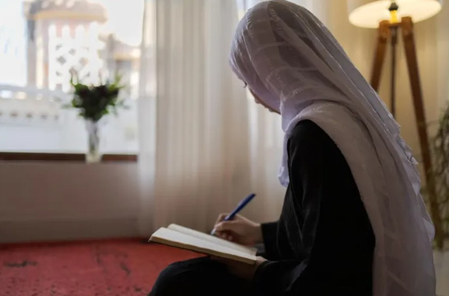
Kabul, April 28 (IANS) The United Nations International Children’s Emergency Fund (UNICEF) on Tuesday warned that Afghanistan risks losing up to 20,000 women teachers and 5,400 healthcare workers by 2030 amid continuing restrictions on girls’ education and women’s employment in the country.
In its latest analysis titled “The Cost of Inaction on Girls’ Education and Women’s Labour Force Participation in Afghanistan”, the UNICEF said that female representation in the civil services fell from 21 per cent to 17.7 per cent between 2023 and 2025.
It cautioned that the declining number of trained women professionals in schools and hospitals across Afghanistan would have devastating consequences for children’s education, health outcomes and future opportunities.
“Restrictions on girls’ and women’s education and work are already costing the country US$84 million annually in lost economic output, with losses compounding over time as they remain blocked from education and employment,” UNICEF mentioned.
According to the UN agency, removing women from teaching and healthcare services in Afghanistan – two sectors where they are permitted to work and critically needed – directly harms children as it will lead to fewer girls in schools and reduced care for women and children.
The impact, it said, is particularly severe in healthcare, where societal context often prevents women from receiving medical services from men– while the declining number of female health workers will directly limit maternal, newborn, and child health services.
“Afghanistan cannot afford to lose future teachers, nurses, doctors, midwives, and social workers, who sustain essential services. This will be the reality if girls continue to be excluded from education,” said UNICEF Executive Director Catherine Russell.
“We urge the de facto authorities to lift the ban on secondary education for girls and call on the international community to remain committed to supporting girls’ rights to learn,” she added.
UNICEF stated that Afghanistan is facing a dual crisis—the loss of trained female professionals and the inability of the next generation to replace them.
As experienced women retire or leave the workforce, it said, girls remain barred from continuing their education and stepping into these roles.
Each year of delay costs Afghanistan another generation of skilled professionals, the UN agency noted.
Since the Afghan Taliban barred girls from secondary education in September 2021, UNICEF said that one million girls have been denied their right to learn in a country that already has one of the lowest female literacy rates in the world.
The analysis indicated that if the ban persists until 2030, more than two million girls in Afghanistan will be deprived of their right to education beyond primary school.
It added that schools are already affected, with the number of female teachers in basic education declining by over 9 per cent – from nearly 73,000 in 2022 to around 66,000 in 2024.
–IANS
scor/rs