



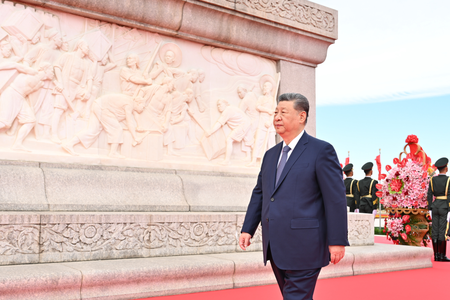
Beijing, Oct 19 (IANS) The unresolved border dispute remains a central security concern and the principal obstacle in India-China relations which are still short of their pre-2020 status quo despite Chinese President Xi Jinping’s visit to New Delhi last month for the BRICS summit prompting speculation that both countries are moving toward a reset, a report has highlighted.
India has sought to stabilise ties and manage differences with China since the 2020 Galwan clashes with the efforts gaining momentum due to US President Donald Trump’s increasingly hostile policies toward India and much of Asia, a report in The Diplomat highlighted.
However, Xi’s New Delhi visit for the BRICS Summit in September and the bilateral meeting with Prime Minister Narendra Modi should not be mistaken for an alignment of interests, the report cautioned.
“The resumption of high-level dialogue, leadership meetings, and direct connectivity are important developments. Another Galwan-like border confrontation would carry heavy domestic costs and could be difficult to recover from. Preventing a recurrence of such violence is a priority. But this does not require India to reconsider its position on the underlying differences,” wrote Sana Hashmi, a fellow at the Taiwan-Asia Exchange Foundation.
“It is also important to note that India never abandoned dialogue with China after Galwan. Keeping communication channel open has remained part of its approach, even as tensions persisted along the border. The latest meetings continue that policy; they do not demonstrate that the relationship or India’s approach to it has fundamentally changed,” Hashmi mentioned.
The report mentioned that China’s recent statement that it does not recognise the Union Territory of Ladakh, underlines the depth of the disagreement.
“There is little basis for expecting a reset while the two sides remain so far apart on territorial issues. Nor is the border the only source of friction. China’s relationship with Pakistan and the persistent trade imbalance remain contentious issues, too. There is little evidence of progress on any of these fundamental differences,” it added.
The Diplomat report stated that the Galwan clashes changed India’s view of and threat perception from China and raised serious questions about the viability of the existing arrangements in ensuring peace along the Line of Actual Control (LAC).
“High-level meetings can help manage tensions for the time being, but they cannot substitute for progress on the ground. India is also unlikely to return to its previous position on the One China policy without some reference to, or assurance regarding, a corresponding One India policy from Beijing. Such an assurance appears unlikely in the foreseeable future,” Hashmi opined.
“Just a couple of years ago, a meeting between Xi and Modi on Indian soil seemed difficult to imagine. That is one of the reasons why their meeting drew so much attention. But it has not changed the scope or nature of the issues dividing the two countries. For now, both sides are trying to prevent another crisis while their core disagreements remain unresolved. Until those differences are addressed, dialogue may keep the relationship from deteriorating further, but it will not put China-India ties on the path to a reset,” the expert added.
During their meeting on the sidelines of the BRICS Summit in New Delhi on September 12, PM Modi had reiterated to Xi Jinping that India and China should show sensitivity to each other’s core concerns and be guided by mutual respect, mutual interest and mutual sensitivity.
Both leaders had emphasised that “differences should not become disputes” and reaffirmed that the two countries should take a strategic and long term perspective of their ties.
“The two leaders welcomed the steady progress in India-China bilateral relations since their last meeting in Tianjin in August 2025. They reaffirmed that both countries should take a strategic and long term perspective of their ties. Differences should not become disputes. Prime Minister highlighted that both sides must be guided by three mutuals- mutual respect, mutual sensitivity and mutual interest,” read a statement issued by the Ministry of External Affairs (MEA) after the meeting.
–IANS
/as