




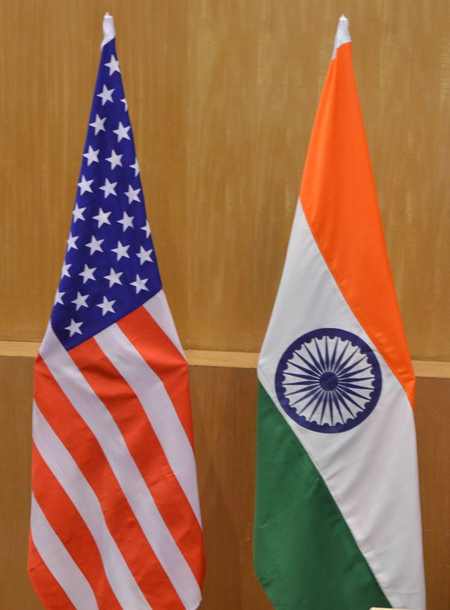
New Delhi, Nov 5 (IANS) With the US midterm election outcome that ended unified Republican control of Congress, the urgency of a trade deal with the US has faded for India, which is a positive sign, a new report showed on Thursday.
The 18 per cent US tariff framework rate was never implemented and Indian goods now face a lower 10 per cent ‘Section 301’ duty, and the US has lost its International Emergency Economic Powers Act (IEEPA) leverage, said the report by Emkay Global Financial Services Ltd.
“The midterms outcome probably will not change the tariff structure much, but it will change Trump’s incentives: fewer new escalation tools, more pressure to deliver consumer affordability, and deals before 2028,” the report argued.
Future escalation must go through slower, investigation-based Section 301 and 232 actions, which reduces the risk of surprise tariff shocks.
“Trade remains one of the few areas he (Trump) controls alone, however, so headline volatility will persist even as the bias softens,” the report mentioned.
The main risks are Section 232 sector tariffs on pharma and electronics and any setback in Russia or Iran diplomacy that brings back pressure over India’s oil imports, it added.
Combined with a softer dollar and easing crude, lower tariff volatility supports the Indian rupee stability and the export outlook, “favouring a gradual compression of India risk premia over a sharp re-rating”.
Brent is already down 19 per cent from recent October 2026 highs to $95 per barrel as the geopolitical risk premium unwinds. This is a clear macro positive for India, where the oil import bill is up 24 per cent FYTD, with Brent averaging $97 per barrel.
This also gives breathing space to the RBI, whose forex defence has become increasingly costly and hostage to a staunch forex stance.
“That relief will be limited, however. Ongoing CAD funding needs and a hefty $239 billion forward dollar liability on the RBI’s books mean it is likely to use any durable inflows to rebuild reserves and its FX buffers, capping INR upside by policy choice,” the report said.
Meanwhile, even if the Fed’s path stays shallow, sticky US inflation means US rates will stay high rather than fall, keeping the RBI vigilant.
–IANS
na/