




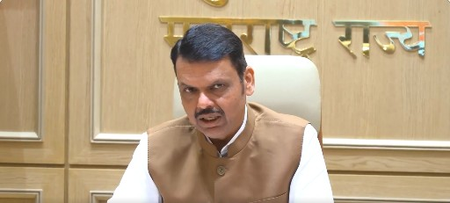
Mumbai, Oct 10 (IANS) In a decisive move to combat mounting agrarian distress, Maharashtra Chief Minister Devendra Fadnavis on Saturday issued stringent directions to state administrative machinery to expedite and ensure the uninterrupted supply of foodgrains to 265 drought-affected talukas across the state without delay.
The directive follows the state’s Relief and Rehabilitation Department’s formal notification enforcing ‘Trigger-1’ drought conditions across 265 talukas following rainfall deficits and related adversities witnessed during the June to September monsoon period.
With severe dry spells threatening the livelihoods of farmers, agricultural labourers, and vulnerable rural populations, the Food, Civil Supplies, and Consumer Protection Department has issued a comprehensive Government Resolution (GR) to streamline immediate relief operations.
The state administration has been ordered to ensure that the distribution of free foodgrains under the National Food Security Act (NFSA) is executed smoothly and immediately, eliminating bureaucratic hurdles.
Authorities have been instructed to rapidly evaluate and include eligible individuals from the affected talukas who are currently outside the NFSA net, ensuring they receive their entitled quota of foodgrains.
Eligible families will receive regular and timely benefits under the Direct Benefit Transfer scheme.
To address rural distress migration, migrant beneficiaries will be able to leverage portability facilities (such as ‘One Nation, One Ration Card’), backed by expedited Aadhaar seeding.
Local administration and district officials have been placed on high alert, directed to exercise personal vigilance to guarantee that not a single eligible household or beneficiary is deprived of their rightful food security.
The state government has emphasised that rural communities heavily dependent on rain-fed agriculture must be shielded from food shortages during this critical period.
District collectors and food supply authorities have been directed to maintain strict surveillance on the distribution network, curb leakages, and prioritise transparency at all fair-price shops across the 265 designated talukas.
By enforcing rigorous monitoring and prompt execution, the state aims to build a robust safety net for millions facing severe economic and agricultural strain, the government sources said.
–IANS
sj/khz