

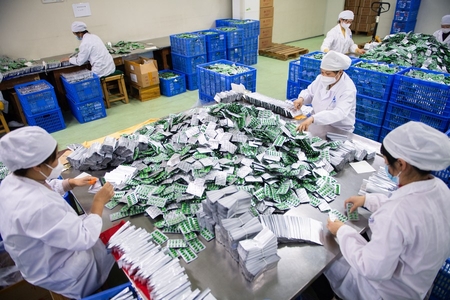
Washington, March 12 (IANS) The United States has become dangerously dependent on China for the raw materials and ingredients used in many of its most common medicines, lawmakers and expert witnesses warned at a Senate hearing, casting the problem as both a national security threat and a looming public health crisis.
The hearing of the Senate Special Committee on Ageing brought together lawmakers and industry experts on Wednesday (local time) who described how decades of offshoring pharmaceutical production have left the United States vulnerable to supply disruptions and foreign leverage over essential drugs.
Opening the hearing, committee chairman Senator Rick Scott said the issue extends far beyond a handful of medicines. He warned that Americans rely on drugs whose key ingredients increasingly originate outside the United States.
“I’m talking about our antibiotics, our diabetes drugs, our blood pressure medications, essential life-saving medicines found in every hospital, every pharmacy, and every medicine cabinet in this country,” Scott said.
He argued that the problem stemmed from policy choices in Washington over several decades, saying the United States had allowed China to capture large portions of the global pharmaceutical supply chain.
“This happened because Washington was negligent,” Scott said, adding that policymakers had prioritised cheaper production costs over security and reliability.
Ranking Member Senator Kirsten Gillibrand said the United States had become reliant on “China and India for key ingredients to manufacture generic drugs, active pharmaceutical ingredients, and key starting materials”.
She said multiple factors had contributed to China’s dominance, including government subsidies, lower labour costs, and weaker environmental regulations, but she also blamed market dynamics that reward lower prices over quality.
“Incentives for manufacturers are solely based on cost and not quality,” Gillibrand said, adding that Congress must empower the Food and Drug Administration to ensure foreign manufacturers comply with US safety standards.
Former Congressman Ted Yoho told the panel that China had benefited from “self-inflicted wounds” in the US system, including regulatory policies and corporate decisions to move production overseas.
“China controls the world market price and supply chain,” Yoho said, warning that such dependence poses both health and national security risks.
Witnesses also raised concerns about the safety and quality of some imported drugs. Rosemary Gibson, author of the book China RX, said a US military testing programme had found serious quality problems in some generic medicines.
According to Gibson, the programme tested 13 generic drugs produced by various manufacturers and found that about 15 per cent failed basic quality standards.
Testing also detected “toxins including thallium,” along with “arsenic, lead and carcinogens” in certain products, she told the committee.
Gibson warned that a disruption in Chinese pharmaceutical exports could have devastating consequences for the US health system. Asked what would happen if China stopped exporting key materials, she responded bluntly: “A lot of people would die in this country.”
Chan Harjivan, a visiting fellow with the Duke-Margolis Institute for Health Policy, urged policymakers to focus on strengthening supply chains rather than attempting complete isolation from global production.
“The goal should not be complete reshoring of global pharmaceutical production,” he said. Instead, the United States should build a resilient network of trusted partners and maintain domestic capacity for critical medicines.
The discussion highlighted growing bipartisan concern in Washington about supply chains tied to China. Similar debates have taken place over semiconductors, rare-earth minerals, and medical equipment, especially since the Covid-19 pandemic exposed weaknesses in global manufacturing networks.
–IANS
lkj/sd/