



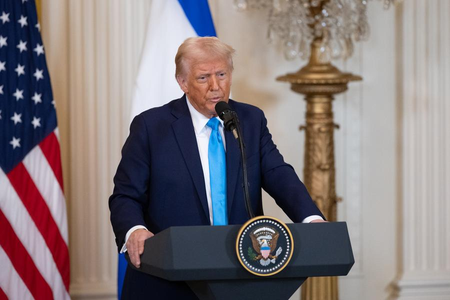
Washington, April 3 (IANS) The United States will impose tariffs of up to 100 per cent on imported patented pharmaceuticals, with President Donald Trump citing national security risks and heavy reliance on foreign supply chains.
In a proclamation issued Thursday, Trump said pharmaceuticals and related ingredients “are being imported into the United States in such quantities and under such circumstances as to threaten to impair the national security of the United States.”
The proclamation targets patented drugs and active pharmaceutical ingredients (APIs). These are critical for both civilian healthcare and military readiness. The administration warned that reliance on overseas production could disrupt access to “life-saving medications” during geopolitical or economic crises.
Under the order, most imported patented pharmaceuticals will face a 100 per cent ad valorem duty. Companies that commit to shifting production to the United States will be subject to a reduced 20 per cent tariff, which will rise to 100 per cent after four years.
The proclamation also outlines differentiated tariff rates for key trading partners. Imports from the European Union, Japan, South Korea and Switzerland will face lower tariffs of around 15 per cent, while certain specialised categories such as orphan drugs, nuclear medicines and gene therapies will remain exempt.
Generic drugs and biosimilars have been excluded from the tariff regime for now. “Generic pharmaceuticals and their associated ingredients shall not be subject to tariffs… at this time,” the proclamation said.
Officials said the policy is part of a broader effort to rebuild domestic pharmaceutical manufacturing and secure supply chains. US Trade Representative Jamieson Greer told reporters at the White House that the focus goes beyond tariffs to long-term restructuring of production.
“It’s less what’s the tariff level, and it’s more all of the actual deals we’ve been making with countries and companies to make sure that the supply chains are secure that we’re making here in America,” Greer said.
He added that companies were already responding to the policy shift. “We see concrete going in, superstructures going up on new pharmaceutical facilities,” he said, pointing to investments in US-based manufacturing.
The tariffs will be implemented in phases beginning July 31, 2026, with some companies facing delayed timelines based on existing agreements.
The decision is expected to have far-reaching implications for global pharmaceutical trade, especially for countries that serve as major suppliers of finished drugs and raw materials.
India and China are among the largest producers of generic medicines and active pharmaceutical ingredients globally, supplying a significant share of the US market. While generics are currently exempt, any future expansion of tariffs could have wider implications for global drug pricing and supply chains.
Section 232 of the Trade Expansion Act, invoked in this case, allows the US President to restrict imports deemed a threat to national security. The provision has previously been used to impose tariffs on steel and aluminium, and its extension to pharmaceuticals marks a significant escalation in trade policy targeting strategic sectors.
–IANS
lkj/rs