




Washington, March 18 (IANS) The United States authorised more than $330 billion in arms exports last fiscal year, a senior State Department official said, as the Trump administration moved to overhaul a slow and complex defence sales system to speed up deliveries to allies.
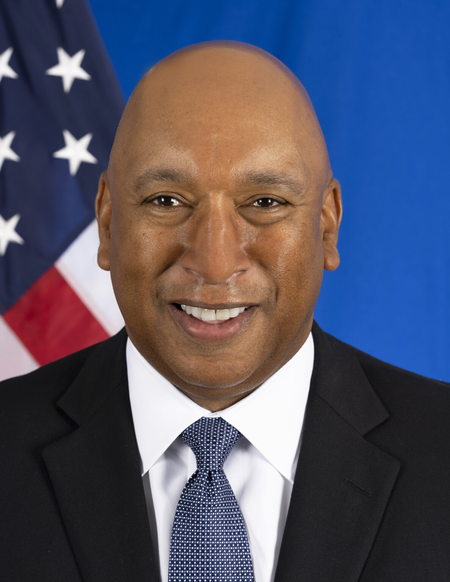
Stanley L. Brown, Senior Bureau Official for the Bureau of Political-Military Affairs, told lawmakers the scale of approvals reflects strong global demand for US weapons systems.
“That demand reflects the trust our allies and partners place in American defense technology and in the United States as the security partner of choice,” Brown said during a House Foreign Affairs Committee hearing here.
He acknowledged, however, that the current system is struggling to keep pace. “Our system has not always operated at the speed or scale required to meet urgent operational demands,” he said.
In his testimony, the State Department official highlighted a series of executive orders, including the “America First Arms Transfer Strategy,” aimed at accelerating approvals, strengthening the defence industrial base, and aligning arms sales with national security priorities.
However, he told the lawmakers that outdated Congressional notification thresholds and procedural delays risk pushing partners towards alternative suppliers, with “long-term interoperability and geopolitical consequences.”
Pentagon acquisition chief Mike Duffey echoed the push for reform, linking arms transfers directly to US military readiness and industrial capacity.
“Our national security is inextricably linked to the strength of both our defense industrial base and our international partners,” Duffey said.
He added that the administration is restructuring the system to remove regulatory bottlenecks and speed up delivery timelines. “America First does not mean America alone,” he said.
Duffey said new arrangements with defence contractors are aimed at expanding production, enabling companies to invest more capital while increasing output of key munitions and systems.
The Defence Security Cooperation Agency processes more than $100 billion annually in arms transfers and supports security cooperation across 136 US embassies, officials said.
Lawmakers sharply differed over the reforms and their broader implications.
Chairman Brian Mast defended the administration’s approach, calling the current process “a Cold War relic” that “actively undermines US national security” by delaying weapons deliveries and weakening allies.
He also backed the use of emergency authorities to expedite arms transfers, saying such steps were necessary to ensure partners receive weapons “at speed.”
Congressman Ryan Zinke noted structural inefficiencies in his remarks. There is a backlog of roughly $250 billion in pending foreign military sales, he said, adding that there is no unified tracking system. He called for “speed, lethality, and organising a database” to improve accountability and delivery timelines.
Ranking Member Gregory Meeks said the administration has shown “systematic contempt for Congressional oversight,” warning that bypassing review processes undermines accountability and weakens alliances.
Congresswoman Madeleine Dean criticised what she described as the administration’s “ignorance and deep contempt for Congress’s constitutional role,” particularly in relation to arms transfers linked to ongoing conflicts.
–IANS
lkj/rs