




Washington, April 21 (IANS) The United States is confronting a “more dangerous era” marked by simultaneous nuclear competition with China and Russia, lawmakers and defence officials warned at a Senate hearing, as the administration pushed for accelerated modernisation of its nuclear arsenal.
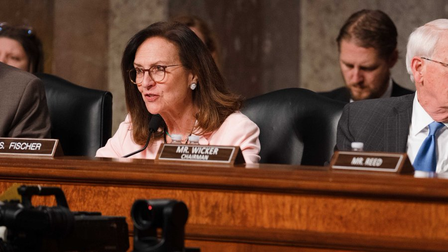
At a Congressional hearing, Senator Deb Fischer said the US now faces “the challenge of simultaneously deterring two nuclear adversaries,” noting that both countries are expanding and modernising their nuclear forces.
“This is not a hypothetical future problem this is a now crisis,” said Robert Kadlec, describing China’s expansion as “breathtaking and opaque” and warning that Russia continues integrating new nuclear capabilities into its strategy.
Officials from the Department of Energy and Department of Defense outlined a sweeping effort to upgrade ageing infrastructure and weapons systems, some dating back to the Cold War.
David Beck told lawmakers that “Russia and China are engaged in an unprecedented nuclear buildup that is rapidly eroding America’s strategic advantage,” adding that modernisation of the nuclear stockpile is the “top priority”.
He said the US is “surging production of plutonium pits, uranium components, high explosives, and other critical materials,” while rebuilding “the aging infrastructure that underpins our entire enterprise.”
Beck also acknowledged the scale of the challenge, noting that the US is undertaking “a very heavy lift” after decades of underinvestment in nuclear infrastructure.
Senator Angus King underscored concerns about China’s rapid build-up, saying recent intelligence briefings highlight developments “to be taken extremely seriously”.
At the Pentagon, officials emphasised urgency in delivering next-generation capabilities. Dale White said key programmes including the Sentinel intercontinental ballistic missile and B-21 bomber are being prioritised to ensure “timely delivery and execution”.
“Our mission is guided by three golden rules… to deliver capabilities to the warfighter at the speed of relevance,” he said.
Military commanders warned that current forces are under strain even as modernisation proceeds. An Air Force Global Strike Command representative said operations are being executed “under ever increasing strain” with “tight margins”.
Naval officials highlighted parallel efforts to sustain sea-based deterrence. William Houston said nuclear-powered submarines and carriers remain central to “maritime dominance,” while stressing the need for continued investment in personnel and infrastructure.
Johnny Wolfe Jr., in his final appearance before the panel, described sea-based nuclear forces as “the bedrock of our national security” and warned that sustaining industrial capacity will be critical to future readiness.
Beyond weapons systems, the Department of Energy pointed to efforts to address legacy environmental risks. Timothy Walsh said the government is working to “clean up environmental legacy sites and protect our communities,” while transforming them into hubs for energy and innovation.
The hearing also highlighted the scale of investment required. Kadlec said nuclear modernisation accounts for about 5.5 per cent of the defence budget, stressing that “the cost of failure… is a world where the risk of miscalculation catastrophic conflict is unacceptably high.”
Lawmakers acknowledged the financial burden of upgrading all three legs of the nuclear triad simultaneously but argued it is unavoidable. King described it as a “pig in the budgetary python,” reflecting the concentration of spending in a short period.
–IANS
lkj/rs