




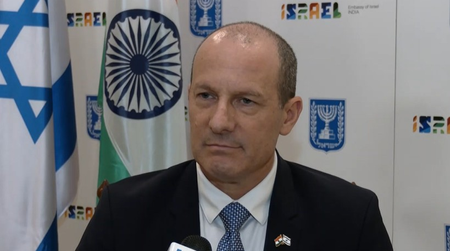
New Delhi, March 25 (IANS) Israel does not place trust in countries with which it lacks diplomatic relations, Israeli Ambassador to India Reuven Azar said, responding to a question on whether Tel Aviv trusts Pakistan in the context of the ongoing Iran conflict and related diplomatic efforts.
In an exclusive interaction with IANS, Azar emphasised that Israel’s approach is guided by its own assessment and that of key allies.
“We are not going to engage in trusting a country that doesn’t have diplomatic relations with us. What we trust is our judgment and the judgment of the President of the United States,” the Israeli envoy told IANS.
His remarks come amid reports suggesting that Pakistan has engaged with the US on the West Asia conflict and has offered to host peace talks involving countries linked to the crisis.
Islamabad, which has its own conflict with Kabul, has projected itself as a potential venue for dialogue, citing its ties with both Washington and Tehran, even as it continues to strike civilians and civilian infrastructures in Afghanistan.
When asked about the United States’ reported plans to invest in Pakistan’s Balochistan province, and whether Israel sees any implications for India-Israel ties, Azar said the matter does not directly concern Israel, while reaffirming close cooperation with New Delhi.
“Israel is not connected to that. We have a very vast cooperation with India. Fortunately, thanks to the visit of Prime Minister Modi, we have been able to advance and sign major agreements, both in the defence sector and in other sectors,” he said.
“We will expand, quite substantially, our industrial defence cooperation, government-to-government ties in order to create technological solutions that give a good answer in the fight against terrorism,” he added.
Prime Minister Narendra Modi visited Israel in February, during which both nations elevated their bilateral ties to a special strategic partnership. The visit saw the signing of more than 16 agreements across sectors such as Artificial Intelligence, cybersecurity, defence, agriculture and space cooperation.
India and Israel also reiterated their commitment to strengthening the global fight against terrorism and expressed support for peace efforts in Gaza.
In the past, Israel has extended strong diplomatic backing to India following terror incidents. After the Pahalgam attack in Jammu and Kashmir, in which 26 tourists were killed by Pakistan-backed terrorists, Israel was among the first countries to express solidarity and support for India’s right to self-defence.
Israeli Prime Minister Benjamin Netanyahu personally spoke to Prime Minister Modi to condemn the attack and conveyed solidarity, drawing parallels with the October 7 attacks in Israel. He also asserted that there should be no safe haven for terrorism.
Following the attack, India launched Operation Sindoor targeting terror infrastructure in Pakistan and Pakistan-occupied Kashmir.
Azar had also stated on X that Israel supports India’s right to self-defence, adding that “terrorists should know there’s no place to hide from their heinous crimes.”
Netanyahu was among the first global leaders to publicly back India’s response, reiterating that every nation has the fundamental right to protect its citizens from cross-border threats.
–IANS
sd/dpb