



Kabul, Aug 11 (IANS) The Taliban regime in Afghanistan on Tuesday responded to the United Nations Assistance Mission in Afghanistan (UNAMA) report on the lack of transparency and accountability in Afghan security institutions, attributing the current secure and stable situation in the war-torn country to the work being done by the security forces.
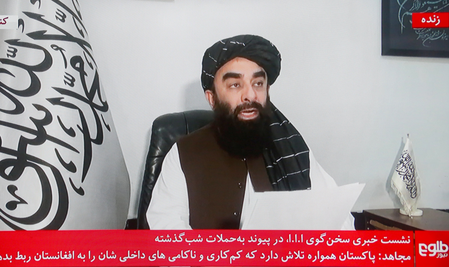
Zabihullah Mujahid, spokesman for the Afghan National Security Agency, said that there may be problems in some cases but activities of the security forces have resulted in the current ‘security and stability’ in the country, Afghanistan-based Khaama Press reported.
He was responding to the 38-page UNAMA’s report on Security Sector Accountability in Afghanistan which was released on Monday and examined efforts taken by the ‘de facto’ authorities since August 2021 to provide oversight and accountability of its primary security institutions, while identifying gaps in transparency and actions.
The report noted the steps taken by the authorities to promote discipline and oversight, including through directives and internal monitoring units within the main security institutions and by establishing new bodies mandated to address misconduct of security personnel.
“UNAMA found that while such steps have been taken, they have not been accompanied by sufficient transparency on oversight and accountability measures by de facto security institutions. These include by bodies established for this purpose, namely the de facto Security and Filtration Commission, the de facto High Directorate of Supervision and Monitoring of Decrees and Edicts, the de facto Ministry of Propagation of Virtue and Prevention of Vice (MPVPV) Commission for Hearing Complaints, and the de facto Supreme Court,” UNAMA said in a press statement.
It also said that UNAMA has documented instances where the authorities conducted arrests and investigations of reported misconduct of the security personnel.
“Many complaints reportedly remain unresolved, while fear of reprisals, lack of trust in de facto authority institutions, and barriers – particularly for women who are subjected to multiple restrictions in their daily lives – discourage reporting of alleged misconduct,” it mentioned.
“The limited amount of public information on complaints received, investigations conducted, and disciplinary or judicial actions taken by relevant de facto bodies undermines confidence and weaken deterrence”, said Georgette Gagnon, Deputy Special Representative of the Secretary-General and Officer-in-Charge of UNAMA.
The report covered accountability efforts since the Taliban came to power in Afghanistan in August, 2021.
–IANS
ksk/as