




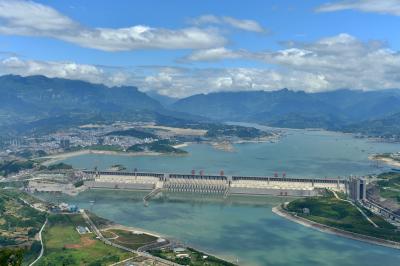
New Delhi, Sep 5 (IANS) China’s mega hydropower project on the Yarlung Tsangpo river in Tibet, near the heavily militarised border with India, warrants urgent global scrutiny amid growing concern over its devastating consequences, a report has stated.
It noted that given the project’s enormous scale and its location in a geologically complex, seismically active Himalayan region, it demands rigorous independent oversight, greater transparency and a thorough evaluation of cross-border risks.
Citing a pivotal 2026 study by Chinese geologists, Somesh Goyal, former Director General of Police of Himachal Pradesh, said the research identified the Paizhen Fault—a highly active fracture since the Pleistocene era—as lying directly beneath or significantly influencing the project area.
The researchers issued a stark warning that the fault could threaten the structural stability of dams, tunnels, roads, bridges and the reservoir itself, Goyal wrote in India Narrative.
“As the river flows into Arunachal Pradesh, it is known as the Siang, then transitions to the Brahmaputra in Assam and eventually reaches Bangladesh. As the principal lower-riparian country downstream, India faces valid and pressing concerns about sudden changes in water flow, sedimentation, flood management, lean-season flows, and strategic vulnerability due to the dam’s position near a politically sensitive international boundary,” the former senior police official highlighted.
“It is unacceptable that India and Bangladesh, as downstream nations, currently lack comprehensive access to the project’s geological assessments, seismic risk models, dam-break scenarios, emergency response plans, reservoir operating protocols, environmental impact evaluations, sediment studies, and real-time hydrological data. In response to these alarming circumstances, India has made it clear that it expects China to resume sharing hydrological data related to the Yarlung Tsangpo/Brahmaputra without delay,” he added.
According to Goyal, in view of the potential risks, a multinational expert panel—involving China, India, Nepal, Bhutan and international specialists—must conduct a comprehensive and independent assessment of the Paizhen Fault, seismic hazards, slope stability, tunnel safety, landslide risks, and potential dam-break scenarios.
“Additionally, China must provide India and Bangladesh with continuous upstream river flow and earthquake data, rather than relying solely on periodic exchanges. Countries that share a river in such fragile geographies must have a right to independent information, prior consultation, real-time data, and credible guarantees against catastrophic downstream consequences,” he added.
The recent devastating floods in Nepal, which have left hundreds dead and caused extensive destruction, serve as a reminder that natural disasters transcend political boundaries. The Tibetan side has also suffered losses, as India braces for potential flooding and the effects of excessive rainfall could extend into the low-lying deltaic areas of Bangladesh, Goyal mentioned.
Emphasising that the Himalayas must be treated as one interconnected disaster-risk system rather than separate national territories, he said, “There is a need for more convergence and reciprocity while planning projects in this fragile landscape.”
— IANS
scor/as