




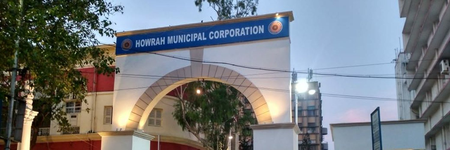
Kolkata, Aug 20 (IANS) For decades, the railways and the Howrah Municipal Corporation (HMC) have been at loggerheads over massive waterlogging in the rail yard outside Howrah station during the monsoons.
With the new government in power in West Bengal, the railways can now expect cooperation from the civic body to sort out the issue, which has disrupted services and led to train cancellations.
A high‑level coordination meeting was held on Thursday, August 20, 2026, between the Howrah Division of Eastern Railway (ER) and the HMC. Senior officials from the railways and the civic body discussed plans to strengthen the drainage network.
“Detailed deliberations were held on developing an integrated, long‑term, and technically sound drainage network for Howrah and adjoining areas, including railway areas, with particular emphasis on preventing waterlogging during heavy rainfall, improving drainage capacity, strengthening pumping arrangements, and ensuring effective disposal of excess water,” a senior ER official said.
Officials comprehensively reviewed the flow of water entering railway premises from adjoining municipal areas, waterlogging at Limited Height Subway (LHS) locations, and various drainage bottlenecks. Officials decided to conduct detailed joint inspections by ER, the state government, and HMC to identify the exact causes and determine water flow routes in affected areas of Howrah, including railway areas.
The entire drainage circuit should be systematically traced, preferably up to its final outfall towards the Hooghly River, so that bottlenecks could be identified and addressed in a coordinated manner, it was agreed.
“The functioning and capacity of pumping stations at critical locations, particularly Mainakpara and Golabari, were also discussed, and the feasibility of additional pumping capacity will be examined wherever required,” the official said.
The Howrah Division has already installed an online automated pumping monitoring system that provides information on the operational status of pumping machines and water levels to enable real‑time monitoring, quicker diagnosis of pumping issues, and timely intervention during heavy rainfall.
The meeting also served as a knowledge-sharing session to help resolve issues more quickly. The drainage arrangements around Rani Jheel, Bamangachi, and Liluah were reviewed, with an emphasis on enhancing water outflow, increasing buffering capacity, and improving the overall drainage network.
The team also discussed a proposal to strengthen the drainage connection towards Kona More, with a suitable outfall to the Hooghly River, in coordination with HMC, Kolkata Municipal Development Authority (KMDA), and other agencies. The team also considered utilising suitable ponds and jheels for temporary water retention and conducting drone‑based monitoring of outfalls.
Officials also reviewed routine drain cleaning, blockage prevention, removal of accumulated waste in the carshed area, and several location‑specific issues at Bally, Dobson Road, Church Road, Dasarath Ghosh Lane, Chandmari Bridge, and Tikiapara.
The railways and civic authorities agreed to work closely together and address drainage lines systematically to create a sustainable, integrated drainage network; improve pumping and water-discharge capacity; prevent waterlogging; and ensure effective management during heavy rainfall.
The city of Howrah has a legacy drainage network, much of which remains clogged with garbage and silt. This hinders water flow during the monsoons and causes backflow into low‑lying areas, such as the Howrah carshed and yard.
Apart from inconveniencing passengers, the waterlogging damages equipment. EMU locals parked at the carshed suffer motor damage due to subsidence and need repairs. The maintenance of long‑distance trains is also hampered.
In the past, the railways’ complaints to the HMC were brushed aside.
–IANS
jg/dan