



Brussels, June 29 (IANS) China’s evolution from former President Jiang Zemin’s message of peaceful narrative to the current leadership, Xi Jinping’s nuclear assertiveness, reflects not just a policy shift but a rejection of the principles Jiang articulated in Tokyo during his 1998 State Visit to Japan.
The promise of a “peaceful rise” has given way to a strategy centred on “deterrence and dominance”. For Asia and the wider world, the message is clear: Beijing’s rhetoric cannot be accepted at face value when its actions increasingly point towards hegemony, a report has stated.
“In November 1998, Jiang Zemin stood before students at Waseda University in Tokyo and reportedly declared, “Even if China develops, it will never bully other countries. It will never seek hegemony.’ The words were meant to reassure Japan and the wider world that China’s rise would be peaceful, cooperative, and non-threatening. Today, under Xi Jinping, that pledge rings hollow. ‘Beijing’s rapid nuclear armament and assertive military posture reveal a China that has moved away from Jiang’s language of restraint toward coercive power projection,” Khedroob Thondup, the nephew of the Dalai Lama, wrote in the ‘European Times’.
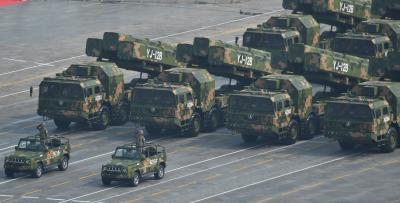
Thondup noted that under Xi, China entered an era of nuclear expansion and growing assertiveness, with its operational nuclear warhead stockpile increasing from the low 200s in 2020 to the low 600s today. He highlighted that the US assessments project the arsenal will exceed 1,000 warheads by 2030.
“Development of hypersonic glide vehicles, Multiple Independently Targetable Reentry Vehicle (MIRVed) missiles and vast new missile silo fields marks a decisive break from China’s earlier restrained posture. Regional coercion: Nuclear modernisation complements aggressive moves in the South China Sea, Taiwan Strait and East China Sea, where China’s military posture increasingly threatens neighbours,” he stated.
According to Thondup, Xi has increasingly relied on nationalism and military strength to consolidate the Chinese Communist Party’s (CCP) authority, marking a shift from Jiang’s emphasis on economic growth and integration with the international community. While Jiang sought to embed China within the global order, Xi is focused on reshaping it.
Thondup argues that Jiang’s optimism in the post-Cold War era has been replaced by Xi’s view of a multipolar and increasingly competitive world, where nuclear deterrence plays a central role.
“Jiang’s pledge of ‘no hegemony’ was a diplomatic reassurance. Xi’s nuclear buildup demonstrates that Beijing now views expanded strategic power as necessary for survival and influence. This contradiction erodes China’s credibility, fuels regional militarisation and undermines trust in CCP commitments,” he noted.
–IANS
scor/ksk/as