



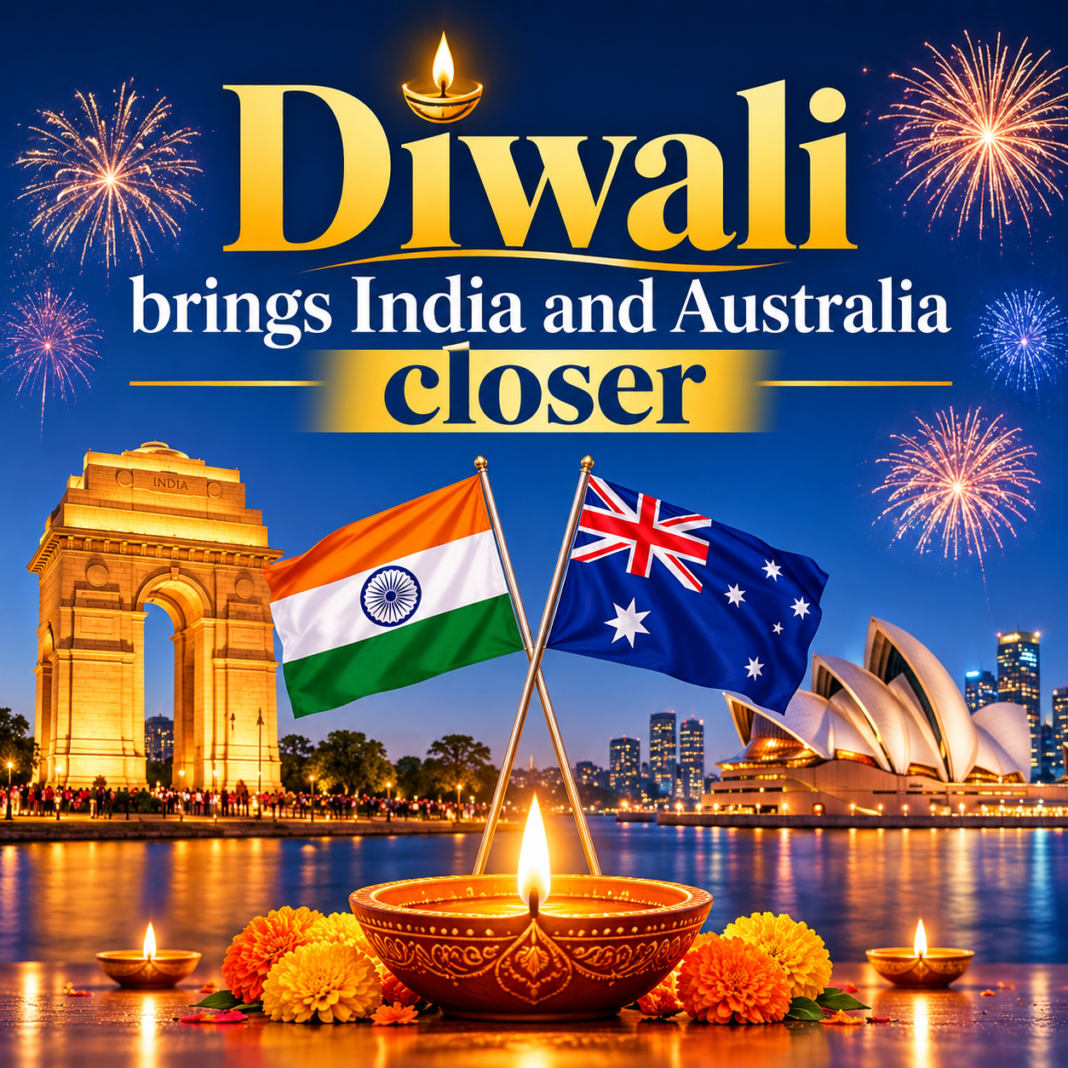
Diwali has travelled a long way from its origins in India. Today, the festival is celebrated in many parts of the world, and Australia is no exception. What was once primarily a family and community occasion has grown into a much wider celebration, bringing together people from different backgrounds. Beyond the lights, sweets and festivities, Diwali is helping Australians understand Indian culture and strengthening the friendship between India and Australia.
The celebration hosted by Federal Minister for Climate Change and Energy Chris Bowen in his McMahon electorate in New South Wales on November 3 was a reflection of this growing connection. India’s High Commissioner to Australia, Nagesh Singh, attended the gathering with his wife, Pragya Singh. Members of the Indian community and Australian political representatives came together to mark the festival.
There is something meaningful about seeing an Indian festival being celebrated in the presence of Australian political leaders. It reflects the place the Indian community has earned in Australian society and the growing recognition of its cultural traditions. Such occasions may not make headlines like a trade agreement or a high-level diplomatic meeting, but they help build something equally important: familiarity, goodwill and a sense of belonging.
Relations between countries are often measured through trade figures, investment, defence cooperation and official visits. These are important measures, but they do not tell the whole story. A relationship also depends on how well people understand each other. Friendships between communities, cultural exchanges and shared celebrations help create that understanding. They give diplomacy a human face.
For Indian Australians, Diwali is a time to reconnect with familiar customs and family traditions. Homes are decorated with lights, families and friends meet, special meals are prepared and prayers are offered. For those who grew up in India, the festival often brings back memories of celebrations at home. For children born and raised in Australia, it is an opportunity to learn about their heritage and understand the traditions that remain important to their families.
The festival also gives Australians from other backgrounds a chance to experience Indian culture. They may join a celebration, share a meal, learn about the significance of the lamps or simply enjoy the warmth of the occasion. These everyday interactions can leave a lasting impression. People who meet and celebrate together are more likely to understand one another than those who know each other only through distant impressions or media reports.
The participation of public representatives adds to the importance of such gatherings. When elected leaders attend community festivals, they show that the traditions and contributions of their constituents are recognised. Chris Bowen’s decision to host the celebration in his electorate provided an opportunity for direct interaction with members of the Indian community. The presence of High Commissioner Nagesh Singh also reflected the value both countries place on maintaining close cultural and community links.
The Indian diaspora has become an important part of Australia’s story. Its contribution can be seen across business, healthcare, education, science, technology, professional services and public life. Indian Australians are also active in local associations, voluntary organisations and neighbourhood initiatives. They have built careers and families in Australia while maintaining strong links with India. In doing so, they have helped connect the two countries in ways that go well beyond formal diplomacy.
Diwali brings many of these connections into view. Community organisations, business representatives, professionals, families and politicians meet in an atmosphere that encourages conversation. People who may not otherwise cross paths get an opportunity to know one another. A festival can provide a natural setting for these exchanges, without the formality of official programmes or business meetings.
It is also worth recognising the diversity within Indian culture. India is home to many languages, regional customs, cuisines, art forms and religious traditions. Diwali itself is observed differently by communities across the country. Celebrations in Australia provide an opportunity to share this variety rather than present Indian culture as a single, uniform tradition. For younger generations, they help keep cultural knowledge alive while allowing them to feel equally at home in Australian society.
For Australia, welcoming festivals such as Diwali is part of the everyday practice of multiculturalism. A diverse society becomes stronger when people are able to preserve their traditions while participating fully in the life of the country. When neighbours, colleagues and local representatives join these celebrations, they show that cultural identity need not divide people. It can be a reason to come together.
India, too, benefits from this growing cultural connection. The Indian community acts as a living link between the two countries. Family relationships, business networks, educational ties and professional exchanges keep the connection active throughout the year. The High Commission and community organisations can build on this goodwill by encouraging cultural programmes, student exchanges and opportunities for Australians to learn more about India’s society and traditions.
Of course, cultural celebrations cannot replace the work of governments. India and Australia have important areas of cooperation in trade, education, energy, technology, defence and regional security. These require regular discussions and practical agreements. But official partnerships are more meaningful when they are supported by public understanding and goodwill. The friendship between two countries cannot rest entirely on the relationship between their governments.
The Indian community also has a part to play. Preserving traditions should go hand in hand with taking an active role in Australian society. Community organisations can encourage young people to participate in public life, build friendships across cultures and contribute to local initiatives. Australians of Indian heritage, with their experience of both countries, can help strengthen these connections.
The McMahon celebration was one example of how this friendship is being nurtured. Its value lay not simply in the presence of prominent guests, but in the opportunity it created for people from different backgrounds to meet and celebrate together.
The strength of India–Australia relations will depend not only on what governments agree upon, but also on the trust and understanding that develop between their people. Diwali offers a simple yet meaningful way to build that bond. As the festival finds an increasingly warm welcome across Australia, its lights are doing more than keeping a cherished tradition alive. They are helping illuminate a closer relationship between the two countries.