




BRISBANE,
November 10
Indian Abroad Newsdesk
Global emissions from fossil fuels are projected to decline slightly in 2026, offering an encouraging sign that renewable energy is beginning to influence the world’s energy system. However, increasing emissions from deforestation and other land-use changes could push total carbon dioxide emissions to another record, according to the latest Global Carbon Budget published by an international research team.
The findings were reported by the University of Exeter on November 10, alongside the release of the 2026 Global Carbon Budget. The annual assessment, prepared by the Global Carbon Project, brings together the work of more than 140 international scientists examining the sources of carbon emissions and the capacity of natural systems to absorb them.
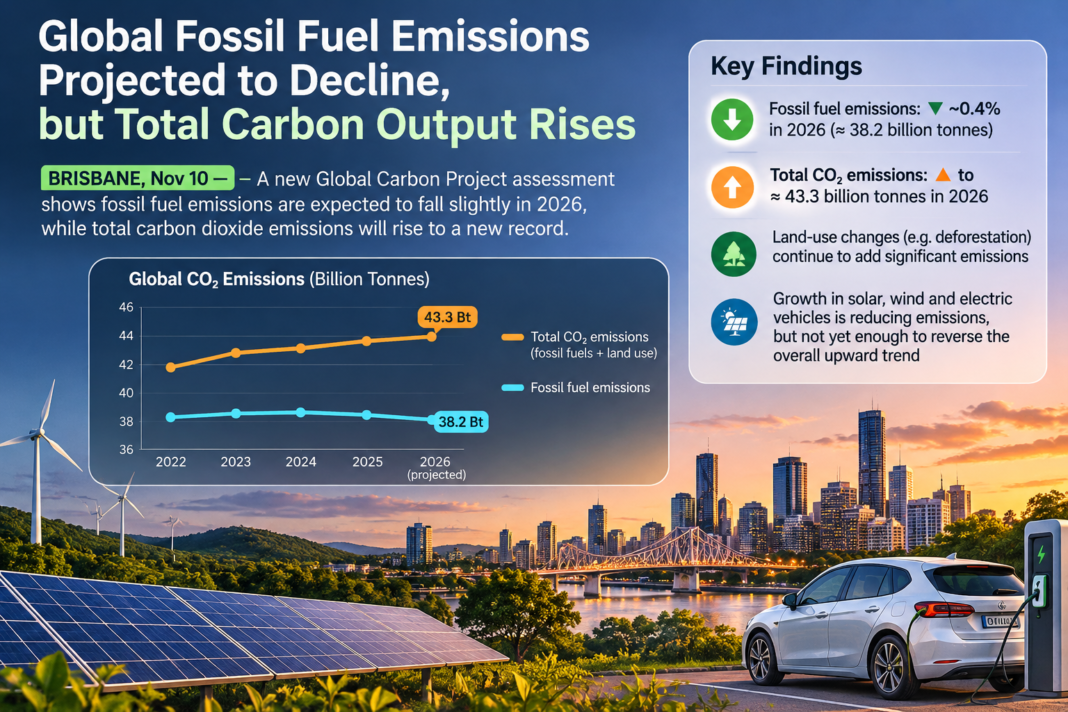
According to the report, fossil fuel emissions are expected to fall by 0.4 per cent in 2026, reaching approximately 38.2 billion tonnes of carbon dioxide. The projected decline has been supported by the expansion of solar and wind energy and the growing use of electric vehicles. Researchers also identified changes in oil consumption associated with the energy disruption linked to the Iran conflict.
The report estimates that oil-related emissions could decline by 1.9 per cent during the year. Renewable energy and electric vehicles are now meeting approximately two-thirds of the additional global energy demand, indicating a gradual shift in the way electricity and transport requirements are being met.
However, the overall emissions picture remains concerning. The Global Carbon Project estimates that when emissions from land-use changes, including deforestation, are included, total global carbon dioxide emissions could reach 43.3 billion tonnes in 2026, compared with 42.8 billion tonnes in 2025.
The researchers warn that the destruction of forests and changes in land management can undermine progress made through cleaner energy. Forests absorb substantial quantities of carbon dioxide, and their removal reduces the planet’s ability to regulate atmospheric carbon levels.
The report also highlights the shrinking carbon budget available to limit global warming to 1.5 degrees Celsius above pre-industrial levels. According to the 2026 assessment, the remaining budget is estimated at approximately 150 billion tonnes of carbon dioxide, equivalent to less than four years of emissions at current rates.
CSIRO, Australia’s national science agency, has also highlighted these findings through its Global Carbon Budget information service, noting that the projected decline in fossil fuel emissions is not yet sufficient to reverse the overall upward trend.
The findings underline the need to accelerate renewable energy development, reduce dependence on fossil fuels and protect forests. Scientists caution that a temporary reduction in fossil fuel emissions should not be mistaken for a lasting reversal of global carbon output.