



Mumbai, Nov 20 (IANS) Chief Minister Devendra Fadnavis on Friday directed officials to formulate an integrated, time-bound, and financially viable long-term water supply plan for the Mumbai Metropolitan Region (MMR) up to 2051 and the Pune Metropolitan Region (PMR) up to 2047, keeping in view growing population, urbanisation, and industrial demand.
Alongside new dam projects, priority must be given to the reuse of treated wastewater, leakage control, rainwater harvesting, and alternative water sources, he stated.
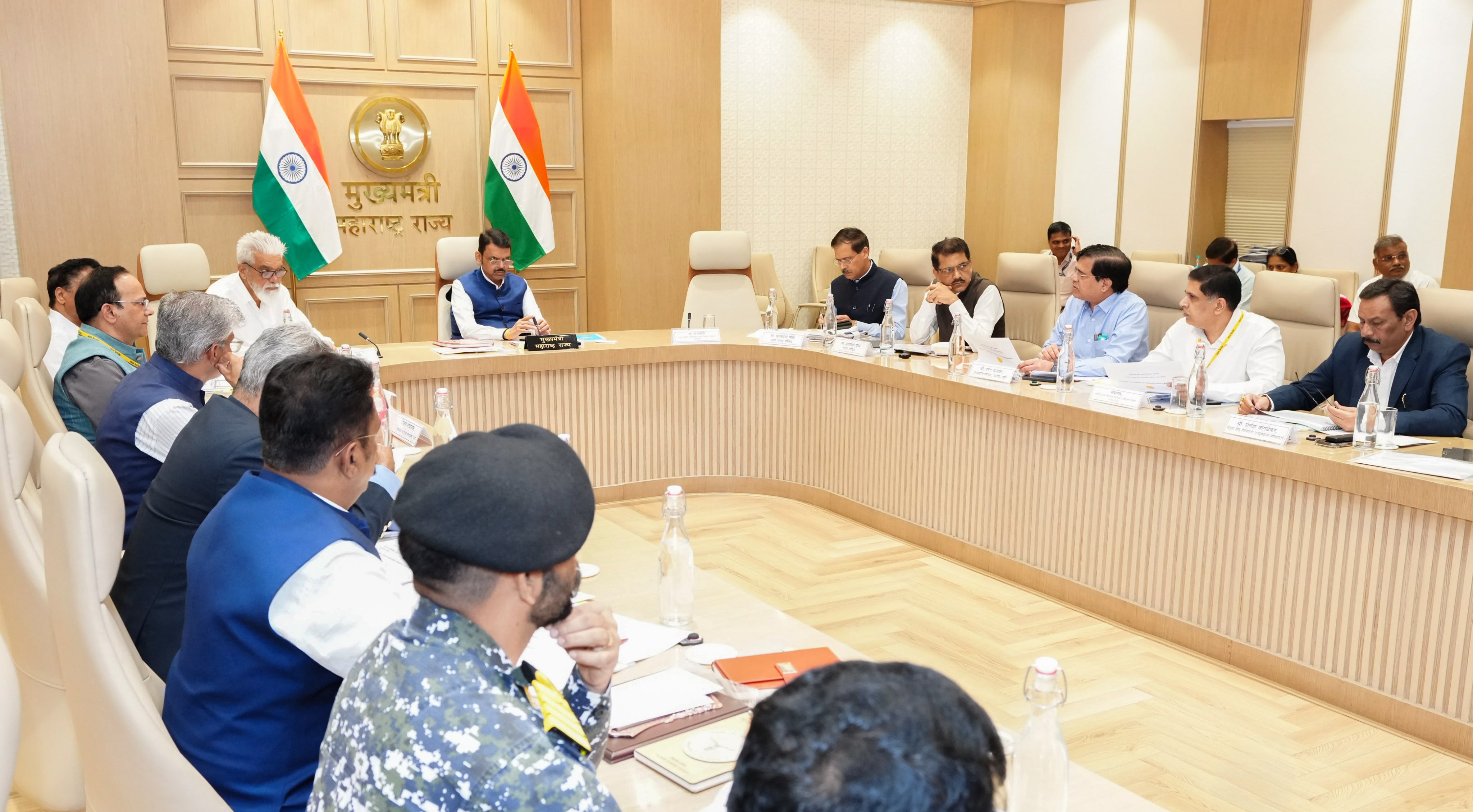
CM Fadnavis chaired a review meeting on water planning and management in the Mumbai and Pune Metropolitan Region Development Authority areas.
Highlighting the rising demand from population growth, rapid urbanisation, industries, and data centres, the Chief Minister stressed the efficient use of existing resources, identification of alternative water sources, and increased recycling of treated wastewater.
He also instructed officials to complete ongoing water projects in the Mumbai and Pune regions on schedule, while carrying out forest and environmental clearances, land acquisition, and rehabilitation in parallel for proposed projects.
To curb non-revenue water, CM Fadnavis directed municipal corporations and councils to conduct water audits to ensure an accurate match between water inflow, distribution, and actual billing, and to expand the use of smart meters for commercial and industrial consumers.
While existing sources such as Bhatsa, Pinjal, Tansa, and Vaitarna remain vital for MMR, CM Fadnavis noted that multi-pronged measures are urgently required to bridge the gap between available and projected supply by 2051.
He instructed authorities to resolve forest land, environmental clearance, land acquisition, and rehabilitation issues on a priority basis for proposed projects including Kalu, Deharji, Balganga, Kondhane, Kholsapada, and Shilar, ensuring all clearances are secured before commencing work to accelerate execution.
MMRDA Metropolitan Commissioner Sanjay Mukherjee presented the authority’s water planning report, noting that MMR’s current population of approximately 2.75 crore is projected to drive total water demand to 16,139 million litres per day (MLD) by 2051.
The plan integrates secondary and tertiary wastewater treatment, separate distribution pipelines, and rainwater harvesting alongside ongoing and proposed dam projects.
PMRDA Metropolitan Commissioner Abhijit Chaudhary presented Pune’s water blueprint, showing that the region’s current population of 1.80 crore is expected to surge to 4.12 crore by 2047. Against a current reservation of 36.90 TMC and present demand of 41.65 TMC, total water demand by 2047 is estimated to reach around 100 TMC (7,816 MLD).
CM Fadnavis directed officials to supply tertiary-treated wastewater to major consumers such as industries, power plants, and data centres, while utilising secondary-treated water for irrigation to reduce pressure on drinking water supplies.
He added that 24×7 water supply schemes, smart metering, and replacing old pipelines to curb leakages and unmetered supply could save roughly 350 MLD of water.
Additionally, the Chief Minister ordered technical and economic feasibility studies for bringing approximately 8 TMC of water from Mulshi Dam via pipeline to the Khadakwasla area and diverting water from the Savitri River basin in Central Konkan toward the Kukadi, Bhima, Indrayani, Mula-Mutha, and Nira basins.
He directed officials to prepare a Preliminary Project Report (PPR) for this river-linking scheme.
CM Fadnavis instructed the Maharashtra Industrial Development Corporation (MIDC) to draft a proposal to establish a wholly-owned subsidiary dedicated to supplying water to industries and data centres.
This entity will source and distribute both regular water and treated water from municipal sewage treatment plants (STPs), backed by policy provisions for integrated operation and maintenance of existing STPs and industrial water supply.
–IANS
sj/dan