




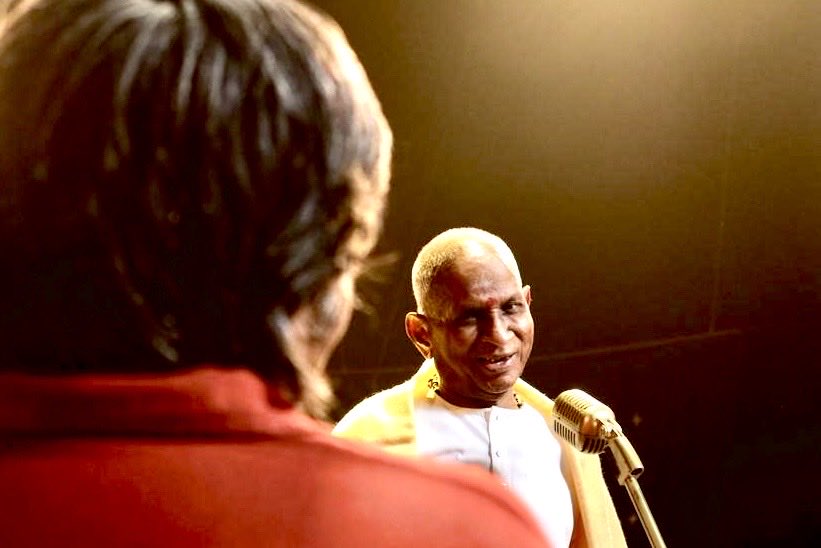
Ilaiyaraaja’s 50-year journey in film music, marked on May 14 with the anniversary of Annakili in 1976, is a milestone that transcends mere longevity. It is a testament to a revolution—one that reshaped the sound of Tamil cinema and, by extension, the wider Indian film music landscape. At 83, the composer from Tamil Nadu has scored more than 1,000 films in nine languages, a record unmatched in Indian cinema, and has composed over 8,000 film songs. His arrival, as celebrated Carnatic musician TM Krishna has observed, was a watershed moment: an intervention by a person from an entirely different social and aesthetic background who imbued a distinct aural soundscape. Before him, film music was largely rooted in Indian classical traditions; Ilaiyaraaja drew on a wide range of global musical traditions, weaving them into a cohesive whole.
Born into a poor, socially marginalised family in Pannaipuram, Ilaiyaraaja was raised on the folk songs and ballads sung by his father, a cardamom estate supervisor who died when the composer was seven. Forced to leave school at 14, he moved to Madras in 1968 in search of a film career, walking miles to save bus fares and often going to bed hungry. Under Dhanraj Master, he studied Western music, mastering the guitar and piano while immersing himself in Bach, Beethoven, Mozart and Schubert. In 1969, he began assisting popular film composer GK Venkatesh, who encouraged him to write orchestra scores. That journey—from a remote village to the world’s concert halls—is the story of modern India itself.
That story reached a symbolic peak this month when Ilaiyaraaja was honoured at the Parliament of Victoria with a ceremonial stamp in commemoration of his 50-year journey in the film industry. The recognition came as part of his golden jubilee world tour, which has taken him across Europe and North America since late July. In a video message, he offered his sincere gratitude to the Minister for Finance of the Victorian Government and the Members of Parliament, adding: “Being born in a small, remote village in Tamil Nadu and honored in an Australian Parliament is truly touching”. He also thanked the countless people who gave life to his music, the artists who walked beside him, and generations of listeners who welcomed his compositions.
For the Indian diaspora in Australia, the Maestro’s visit is more than a concert tour. It is a cultural homecoming. His scheduled performances in Sydney and Brisbane, following earlier dates in Melbourne and Perth, bring the melodies that have soundtracked generations of Tamil, Telugu and Malayali households to audiences far from the subcontinent. The stamps, the packed auditoriums and the standing ovations are not merely accolades for a composer; they are affirmations of a shared cultural inheritance that migration has not eroded but strengthened.
Ilaiyaraaja’s 50 years are a reminder that great art is not bound by geography or language. The boy who walked miles to save bus fares now travels the world, carrying the folk traditions of Tamil Nadu into the concert halls of the West. His music has always been both deeply rooted and universally resonant. The Australian honour is a fitting recognition of that duality—and of the enduring soft power of Indian culture abroad.