




Washington, Nov 20 (IANS) A bipartisan group of US senators introduced legislation to require greater disclosure of artificial intelligence investments and financing arrangements, arguing that investors need a clearer picture of the financial risks behind the industry’s rapid expansion.
The Advancing Uniform Disclosure of Investments and Transparency of Artificial Intelligence Act, or AUDIT AI Act, would direct the Securities and Exchange Commission (SEC) to develop rules covering corporate oversight, infrastructure financing and AI-related risks.
Democratic Senators Mark Warner and Angela Alsobrooks joined Republicans John Kennedy and Mike Rounds in introducing the proposal. It remains proposed legislation and does not impose new requirements unless enacted and implemented.
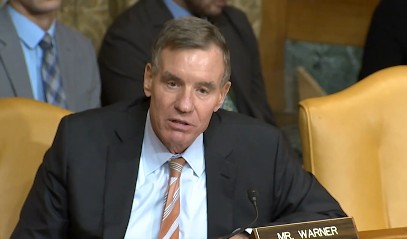
“Investors and policymakers deserve to know where that money is going, how these deals are being financed, and what risks are involved,” Warner said.
The proposal targets the difficulty of assessing financial exposure when AI infrastructure is financed through joint ventures, separate investment entities and contractual commitments.
Non-financial public companies would have to identify relevant AI infrastructure entities and financing arrangements in annual and quarterly reports and offering statements. These arrangements could include leases, guarantees and servicing commitments.
The SEC would determine additional disclosure details, potentially including ownership stakes, debt levels, major counterparties and contractual commitments.
Politico, which first reported the legislation, said Warner was concerned about circular investment arrangements in which companies finance businesses that are also their customers. He also questioned whether investors have enough information about financing conducted through entities outside a company’s directly reported accounts.
Warner told the publication that insufficient transparency made it difficult to assess how widely a setback in AI investment could spread through the economy. That is his assessment of potential risk, rather than a finding that a collapse is imminent.
The bill would also require covered companies to disclose whether they have an AI governance policy and a dedicated board committee overseeing the technology.
Companies without such arrangements would have to explain their position. The text allows companies to identify existing board committees with broader responsibilities that already oversee AI, rather than requiring every company to establish a separate committee.
For companies with significant AI exposure, the proposal would create a standardised risk section in annual Form 10-K reports. Categories would include dependence on outside AI models, concentration among computing providers, changing training and operating costs, and liabilities associated with data rights.
A separate provision would direct the SEC to study whether financial reporting adequately captures AI research and development, infrastructure and revenue.
The study would examine issues such as model-training costs, obsolete models, assumptions about the useful life of AI infrastructure, and the merits of separately reporting AI-related revenue and capital spending.
The proposal would further require annual SEC reporting on how automated investment strategies affect securities prices and market efficiency, including the risk of investors using similar systems moving together.
Former SEC commissioner Robert Jackson and former SEC chief accountant Paul Munter supported the proposal in statements included in the sponsors’ release.
–IANS
lkj/rs