




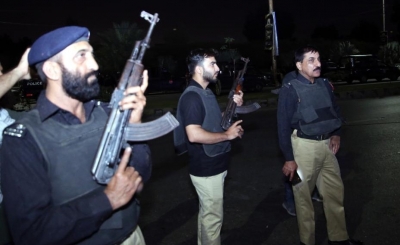
Islamabad, June 7 (IANS) Three members of the Ahmadiyya community were injured after an unidentified assailant opened fire outside their place of worship in Chenab Nagar city of Pakistan’s Punjab province, local media reported on Sunday.
The incident took place when three volunteers were doing security duty outside Al Aqsa worship place, according to the first information report (FIR) registered by the Chenab Nagar police, Pakistan’s daily Dawn reported.
Al Aqsa is one of the largest and central places of worship for the Ahmadiyya Muslim Community.
Police said a young man riding a motorcycle came near the gate of the worship place and opened fire on the volunteers. Following the incident, he fled from the spot. The injured men were taken to hospital for treatment.
One of the injured persons was reported to be in critical condition.
Ahmaddiya Community spokesperson Amir Mahmood condemned the incident and said it was the second such incident targeting Ahmadis in Chenab Nagar in the past few months, sparking concerns about security among the community members, Dawn reported.
Earlier in May, a leading international human rights organisation wrote to Punjab Chief Minister Maryam Nawaz, expressing grave concerns over the structural and persistent discrimination, harassment and violence against the Ahmadiyya community in the province.
In its letter to CM Maryam Nawaz, Amnesty International said that these violations routinely intensify in periods preceding and during major religious occasions, like the Eid al-Adha.
The rights body called on the government to take immediate and preventive measures to ensure the rights to freedom of religion and belief, peaceful assembly, freedom of expression and equality before the law of Ahmadis are upheld across Punjab.
According to Amnesty International, the incidents of violence and harassment have consistently escalated, both in volume and intensity, during and around religious holidays.
Earlier, during Eid ul-Fitr, Amnesty International documented reports of unlawful restrictions on Ahmadi religious practices imposed by local administrative and police authorities across several districts in the Punjab province.
“The reports indicate that Ahmadi congregations were explicitly prohibited in Gujranwala, and police intervened at six locations in Sialkot to stop all worship activities on Eid day, 21 March 2026. On the same day, worshippers were reportedly removed from a place of worship during prayers in Faisalabad, and multiple places of worship were sealed in Sargodha,” the rights body noted.
“These incidents reflect a recurring pattern that amounts to unlawful interference with the right to freedom of religion and belief,” it added.
The rights organisation urged the provincial government to take decisive and preemptive measures to respect, protect, promote and guarantee the human rights of the Ahmadiyya community in Punjab.
“This includes effective and urgent action to ensure that officials from police and local administrations refrain from interfering with the right of the Ahmadiyya community to practise their religion, to end arbitrary arrests and detentions, and to prevent raids or attacks on homes and places of worship and sealing of such places,” it stated.
The rights body further said that the manner in which Ahmadis are targeted across Pakistan violates their rights to liberty and security of person, freedom of expression, peaceful assembly, and non-discrimination. In many cases, it said, these actions amount to “unlawful and arbitrary interference” in the privacy, family and home of members of the Ahmadiyya community.
Amnesty International also called on the Punjab government to investigate past incidents of violence, harassment, and discrimination against Ahmadis during Eid celebrations in an independent, impartial, and transparent manner.
It further urged the establishment of an effective reporting and accountability system to ensure swift action against any violations during the upcoming Eid ul-Adha and accountability for all perpetrators, including state and non-state actors.
–IANS
akl/sd/